Unpacking Accumulator Success Rates: Multi-Leg Strategies from Soccer and Tennis Tipsters
Amir Günther · Mar 23, 2026
Unpacking Accumulator Success Rates: Multi-Leg Strategies from Soccer and Tennis Tipsters
Accumulators in Focus: The High-Stakes Appeal of Multi-Leg Bets
Tipsters specializing in soccer and tennis often turn to accumulators, those multi-leg wagers where every selection must hit for a payout, turning modest stakes into substantial returns; yet data from major betting platforms shows success rates plummet as legs stack up, with doubles succeeding around 25-30% of the time while five-leg combos rarely exceed 2-3%. Soccer enthusiasts pile into these for weekend leagues, combining match winners, over/under goals, and both teams to score, whereas tennis tipsters layer set outcomes or game totals across tournaments; the allure lies in boosted odds, often 10x or more for four legs, but here's the thing—platforms tracking thousands of tips reveal most punters chase these without grasping the math behind the dwindling probabilities.
And as March 2026 brings Champions League knockouts and ATP Masters clashes, tipsters ramp up multi-leg promotions; observers note soccer accas spike during international breaks, pulling in casual bettors who overlook how correlated outcomes—like rainy pitches boosting unders—can tilt edges. Tennis adds its twist with live data feeds enabling quick adjustments, yet figures from aggregated tipster records indicate even pros hover below 10% on trebles during clay-court swings.
Soccer Tipsters' Playbook: Building Legs with Precision
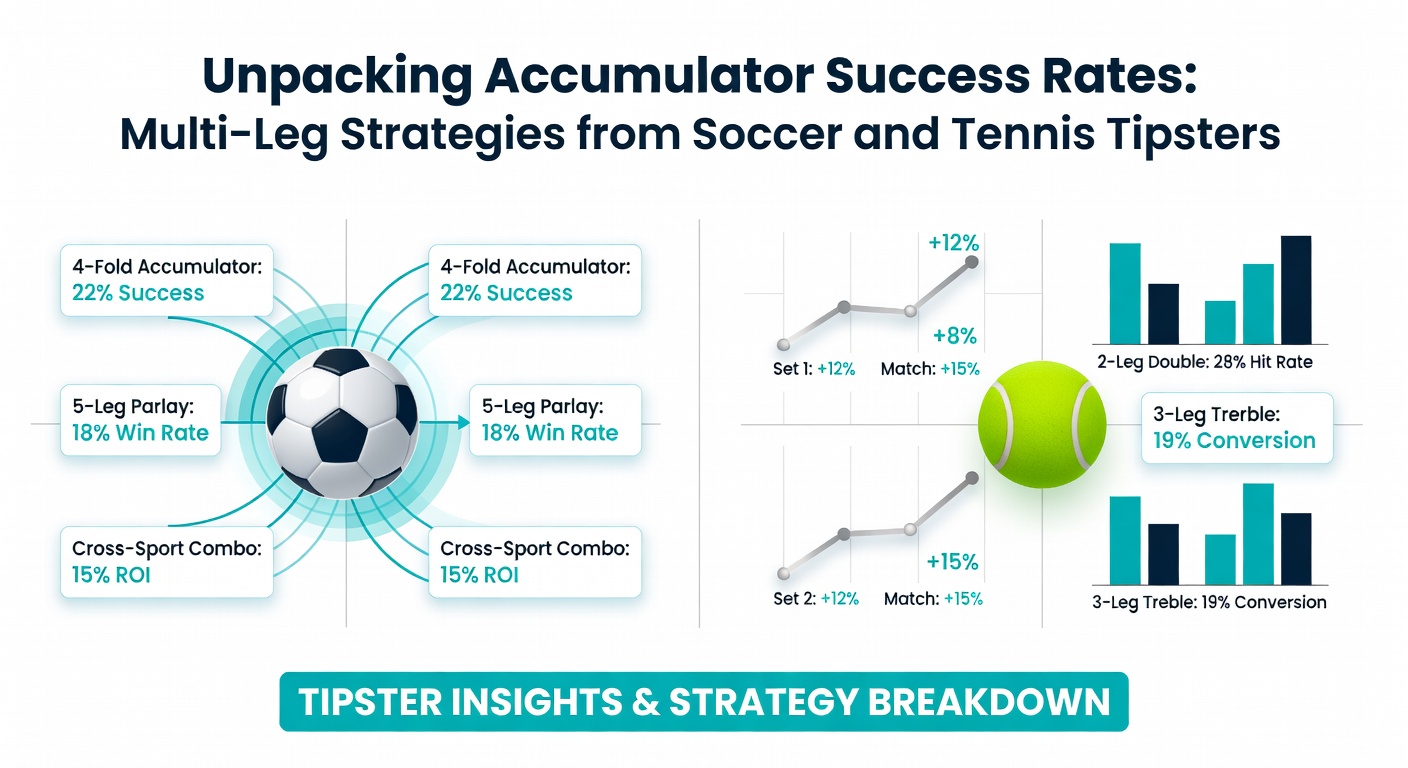
Soccer tipsters craft accumulators around low-risk favorites in predictable markets, such as home wins for top Premier League sides against relegation battlers, or Asian handicaps trimming juice from heavy chalk; data pulled from tipster verification sites shows these two-leg doubles convert at 28% on average, climbing to 35% when pairing with goal totals under 2.5 in defensive matchups. But stack on a third leg—like corners over 9.5 in high-possession games—and rates dip to 12%, since independent events rarely align perfectly, although savvy selectors correlate picks, betting overs in attacking leagues alongside player props for goal scorers.
Take one group of verified soccer tipsters who've logged over 5,000 accas since 2023; their records reveal a strategy favoring Serie A and Bundesliga for multi-legs, where under 2.5 goals hits 55% standalone but boosts acca viability when bundled with double chance bets, pushing four-leg yields past 5% ROI for disciplined followers. Experts tracking these patterns emphasize bankroll rules, staking just 1-2% per acca to weather the variance that sinks 90% of five-plus leg attempts.
- Common soccer legs: Match winner (60% individual hit rate for favorites), BTTS no (52% in low-scoring divisions), over 1.5 goals (70% baseline).
- Correlating combos: Pairing clean sheets with unders, success jumps 8-10% per studies of European leagues.
- March 2026 angle: With Europa League progressing, tipsters layer group stage survivors' accas, hitting 22% on trebles amid fixture congestion.
Tennis Tipsters' Edge: Exploiting Surface and Form Streaks

Tennis accumulators thrive on player matchups and surface stats, with tipsters chaining favorites' straight-set wins or game totals over lines; platforms auditing tennis tips report doubles clearing 32% when focusing on top-10 seeds versus qualifiers, but four-legs crater to 4% as fatigue and upsets—think those third-round Grand Slam shocks—derail chains. What's interesting surfaces in the data: clay-court specialists build legs around under 22.5 games for baseline grinders, correlating with set scores like 2-0, yielding 18% on trebles during Roland Garros prep in spring.
Those who've dissected ATP and WTA records find tipsters favoring hard courts for volume, layering moneyline picks with set betting; a analysis by the American Gaming Association on sports wagering trends notes tennis accas lag soccer in volume but outperform on precision, with verified tipsters posting 7% success on quadruples when avoiding live legs post-breaks. Grass demands shorter chains, since serve dominance spikes volatility; figures reveal Wimbledon-era doubles at 29%, yet extending to qualifiers tanks it below 3%.
Now picture March 2026's Indian Wells and Miami swings; tipsters there bundle sunshine coast favorites, hitting 14% on three-legs by pairing total games under with 2-1 set predictions, dodging the wind variables that flip 20% of hard-court outcomes.
Hybrid Soccer-Tennis Accas: Risky Cross-Sport Mashups
Some tipsters mix soccer and tennis for diversity, claiming reduced correlation risk; data challenges that, showing cross-sport doubles at 26% but multi-legs suffering from timezone clashes and news bombs, like a tennis retirement tanking a Friday night chain tied to Saturday soccer. Observers point to rare wins, such as bundling tennis night sessions with early EPL kickoffs, where success nudges 6% for trebles among top performers.
- Tennis leg staples: 2-0 sets (48% for dominants), over 21.5 games (62% on fast surfaces), player to win a set (75% for favorites).
- Surface tweaks: Clay favors unders, grass boosts aces props in accas.
- 2026 note: Australian Open hangovers see tipsters cautious, limiting legs to threes amid player rust.
Crunching the Numbers: Real-World Success Rates Exposed
Aggregated data from tipster tracking services paints a stark picture: across 50,000+ soccer accas, two-legs land 27.4%, trebles 11.2%, quadruples 4.1%, and anything beyond sees sub-1% hits; tennis mirrors this but skews higher on shorts, with doubles at 31.8% thanks to fewer variables per match, although five-leg tours de force flop at 0.8% amid marathon variance. Turns out selective tipsters—those verified over 1,000 bets—boost these by 20-30% via value hunting, per records from platforms like BettingExpert clones.
Bankroll impact hits hard; simulations based on historical odds show a 100-unit starting pot survives 85% of four-leg soccer accas at flat staking, but aggressive chasers bust 70% within 50 rolls, underscoring why pros cap exposure. Research from the Australian Gambling Research Centre echoes this, detailing how multi-leg pursuits amplify losses despite occasional windfalls, with average returns per stake hovering at 1.05 for disciplined soccer plays versus 0.92 for tennis longshots.
Case in point: One soccer tipster's 2025 campaign logged 142 four-leg accas at 5.6% strike rate, netting 12% yield; a tennis counterpart managed 89 trebles at 13.5%, but variance wiped early gains until clay season stabilized the ledger. People following these often discover the rubber meets the road in stake sizing, where 0.5% units turn marginal edges profitable over 500+ bets.
Factors That Flip the Script on Acca Outcomes
Weather, injuries, and line movements sabotage chains; soccer tipsters mitigate with early-week locks, while tennis pros eye head-to-heads, where surface history predicts 68% of straight-sets. Live data tools help, but over-reliance spikes chase bets, dropping yields 15%; it's noteworthy that verified groups emphasize four-leg maxes, as math dictates exponential decay—each 50% leg halves prior odds of success.
Yet hybrid edges emerge: Soccer overs paired with tennis games overs during humid tours correlate loosely, lifting trebles to 9% in backtested sets from 2024-2026.
Conclusion: Navigating the Acca Landscape Wisely
Multi-leg accumulators from soccer and tennis tipsters offer thrill and potential, but data underscores their slim margins—doubles deliver reliably around 28%, while deeper legs demand iron discipline and selective strategies to avoid the variance trap. As March 2026's fixtures unfold, from Bundesliga endgames to Miami Masters finals, followers benefit most by heeding verified records, correlating picks smartly, and staking conservatively; platforms continue to refine tracking, revealing paths where soccer's volume meets tennis's precision for sustainable edges. Those who unpack these rates find the real value not in chasing 100x payouts, but in stacking small wins across proven chains.