Temperature Swing Impacts on Outdoor Athletic Performances Across Disciplines
Yves Werner · Aug 19, 2026
Temperature Swing Impacts on Outdoor Athletic Performances Across Disciplines
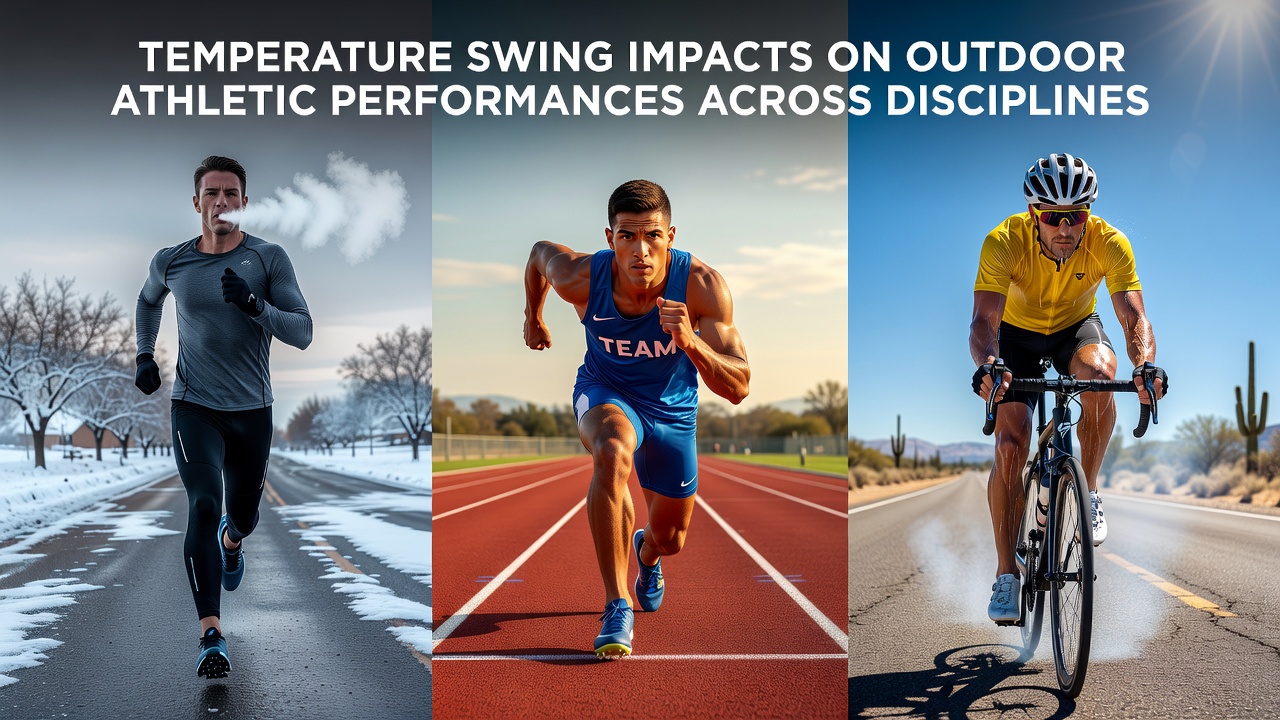
Outdoor athletic events expose competitors to temperature swings that range from sudden heat spikes to rapid cooling periods, and these shifts influence performance metrics across running, cycling, tennis, and team sports. Researchers track how core body temperature adjustments, hydration demands, and muscle response times change when ambient conditions fluctuate by more than 10 degrees Celsius within a single session. Data from multiple disciplines show that endurance athletes face greater oxygen uptake costs during heat phases, while power-based events suffer reduced force output in cooler swings.
Endurance Disciplines and Heat Load
Marathon runners and long-distance cyclists encounter elevated heart rates when temperatures climb above 25 degrees Celsius, and studies indicate that every additional degree raises perceived exertion levels by measurable margins. A 2024 analysis of elite road races revealed that finish times lengthen by 1 to 3 percent for every 5-degree increase once thresholds exceed typical training ranges. Cyclists in multi-stage tours experience similar patterns because sustained power output drops as sweat evaporation fails to keep pace with rising humidity combined with temperature.
Those who monitor professional events note that recovery intervals between stages shorten effective adaptation windows when overnight lows fail to drop below 20 degrees, leaving riders with residual heat strain. Evidence from road race records demonstrates that pacing strategies shift earlier in races during warm afternoons compared with cooler morning starts.
Team Sports and Variable Conditions
Soccer and field hockey matches played across afternoon-to-evening transitions introduce distinct challenges because players must maintain repeated sprint capacity while body temperatures swing. Match data collected during European leagues show reduced high-intensity running distances when second-half temperatures fall by 8 degrees or more. American football practices scheduled in late summer afternoons record higher rates of heat-related medical interventions when morning lows remain elevated, limiting overnight cooling for athletes.
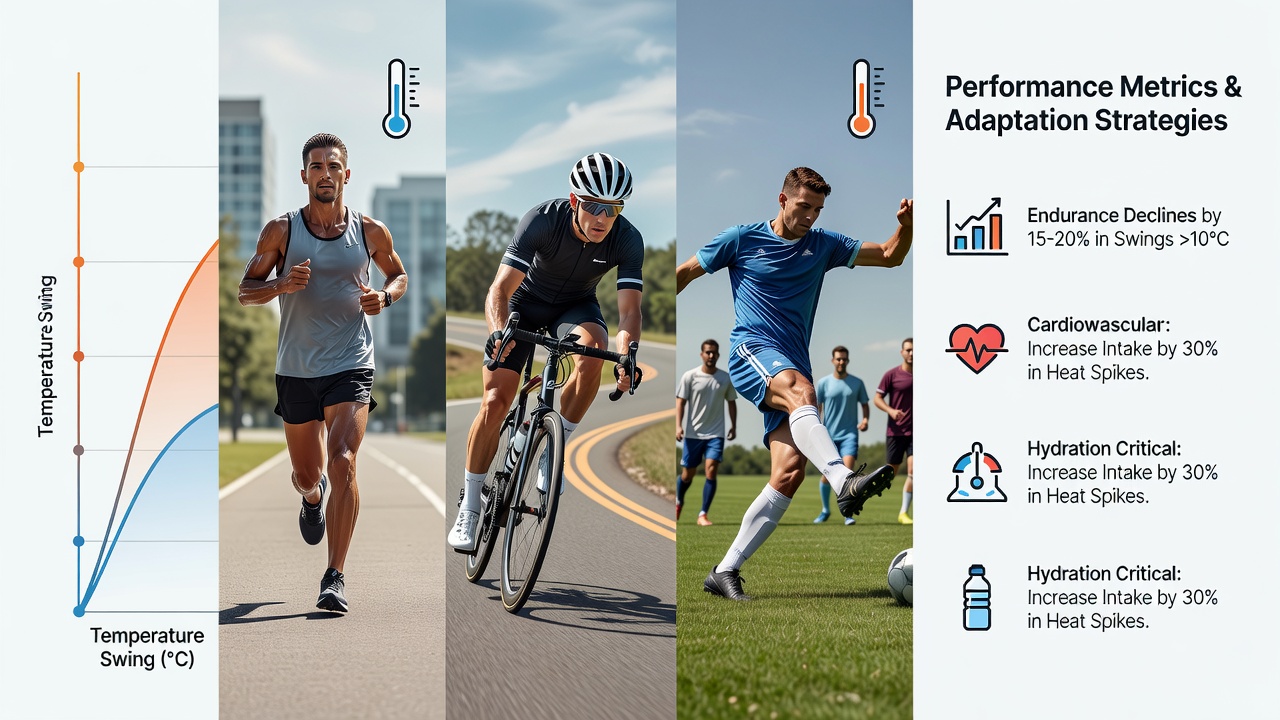
Tennis players competing in outdoor tournaments adjust stroke velocity and court coverage when surface temperatures rise and fall rapidly between sets, and ball speed measurements indicate measurable changes tied directly to air temperature rather than player fatigue alone. Observers note that serve percentages decline during hotter portions of matches while error rates climb in cooler evening conditions because grip and muscle elasticity respond differently.
Cold Snap Effects on Power and Flexibility
Winter and shoulder-season competitions introduce opposite stresses when temperatures drop quickly. Sprinters and jumpers lose elastic energy return in muscles cooled below 15 degrees Celsius, and track meet results document slower reaction times plus reduced jump heights during early morning events. Rugby and lacrosse athletes experience increased soft-tissue strain reports when games begin in cold conditions and warm only slightly by halftime.
Studies compiled by the Australian Institute of Sport indicate that dynamic warm-up protocols extend required preparation time by 20 percent during cold swings, and athletes who skip extended routines show higher injury incidence in the first 15 minutes of play. Those monitoring alpine skiing events report that gate times lengthen when overnight temperature drops exceed 12 degrees because snow conditions harden and edge grip changes.
Adaptation Data and August 2026 Context
Training logs from athletes preparing for major summer competitions in 2026 show increased use of heat acclimation chambers and cold-water immersion cycles to blunt the effects of daily temperature swings. Figures released by the World Health Organization highlight rising numbers of outdoor events scheduled during periods of greater diurnal variation, prompting organizers to adjust start times and medical staffing levels.
Performance databases maintained by university research groups reveal that athletes who complete 10 to 14 days of controlled exposure to both heat and cold phases maintain closer to baseline output when competition temperatures swing unpredictably. Event planners for August 2026 gatherings incorporate real-time weather monitoring that triggers schedule modifications once swings surpass predefined thresholds.
Conclusion
Temperature swings alter physiological responses and performance outputs across outdoor disciplines in consistent, measurable ways. Endurance events suffer most during upward swings while power and team sports register impacts from both heating and cooling phases. Data collected through 2026 continue to inform scheduling, preparation protocols, and on-site interventions that keep competition conditions as stable as possible within natural environmental limits.