Referee tendency databases: unlocking prop bet opportunities in European basketball leagues
Amir Günther · May 24, 2026
Referee tendency databases: unlocking prop bet opportunities in European basketball leagues
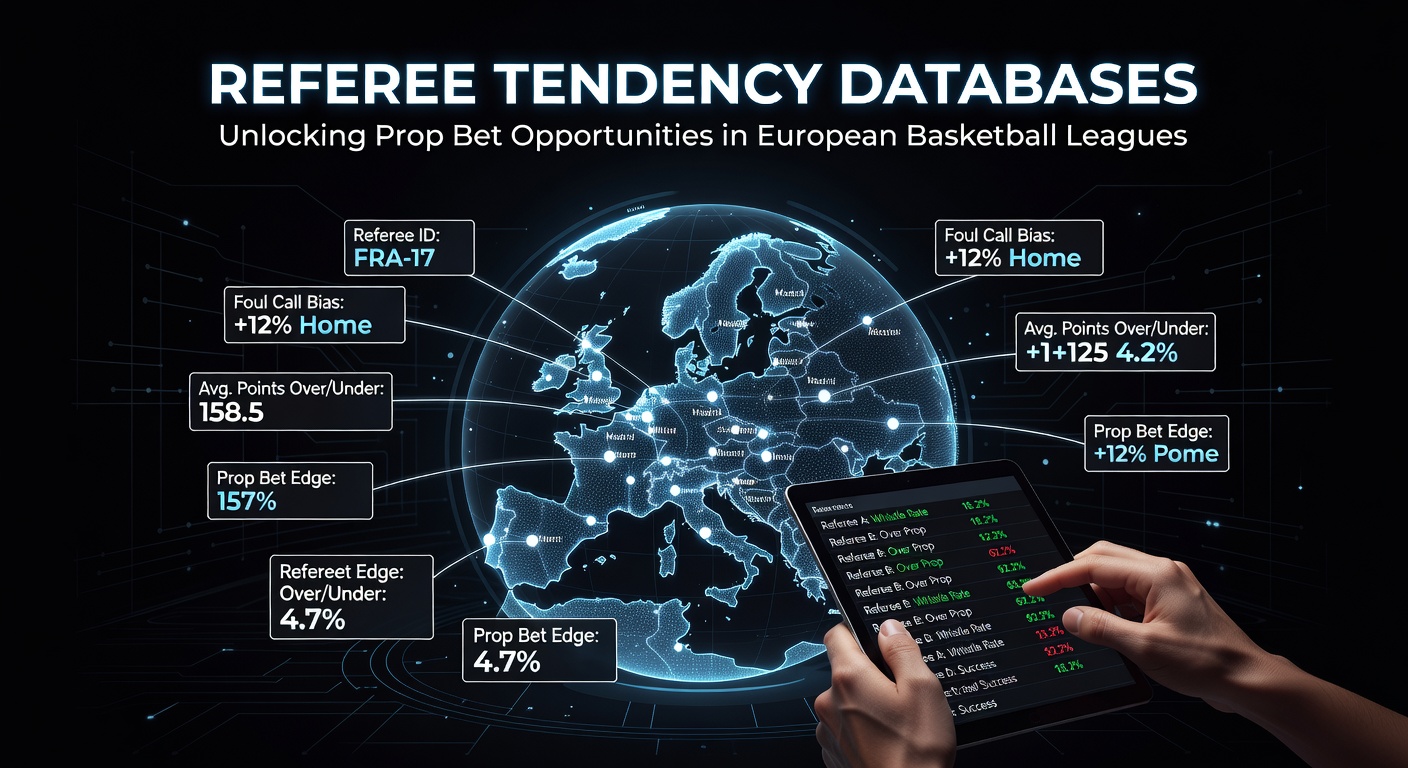
Referee tendency databases compile detailed records of officiating decisions across European basketball competitions including the EuroLeague, Spain's Liga ACB, Germany's easyCredit BBL, and Italy's Lega Basket Serie A, where each entry tracks fouls called, free throw awards, technical infractions, and timeout interventions by individual officials. These repositories draw from video reviews, league reports, and statistical feeds that update after every game, allowing analysts to identify consistent patterns in how referees manage player contact and game flow.
Data Sources and Collection Methods
European basketball federations maintain centralized systems that log referee assignments alongside granular metrics such as foul frequency per quarter, preference for calling offensive versus defensive infractions, and average free throw attempts generated under specific score differentials. In May 2026 several leagues expanded these systems to incorporate automated tracking from optical sensors installed in arenas, which cross-reference human calls with positional data to flag deviations. Observers note that such integration improves accuracy because it captures variables like player positioning and movement speed that influence decision consistency across different venues and time zones.
Patterns Relevant to Player Prop Markets
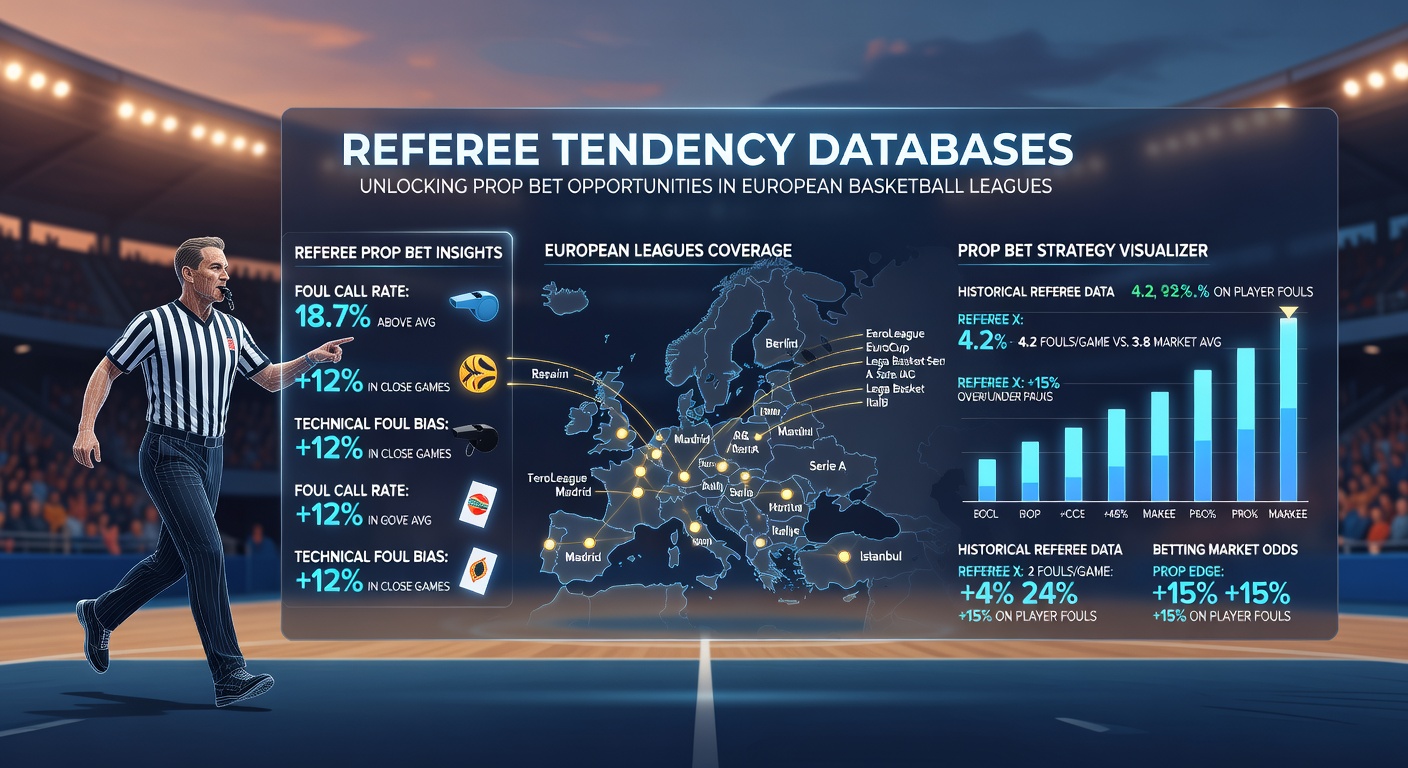
Databases reveal that certain referees award free throws at rates 15 to 22 percent above league averages when specific star players drive to the basket, while others maintain stricter thresholds for defensive three-second violations. Prop bettors access filtered queries that isolate these tendencies by official, home versus away status, and team defensive schemes, then cross-reference upcoming schedules to match officials with matchups likely to produce elevated or suppressed foul totals. Research from academic institutions in Canada shows that aggregating three seasons of EuroLeague data improves identification of referee clusters that favor perimeter fouls over interior contact, directly affecting over/under lines on player assists and points scored inside the paint.
Applications in Team and League Contexts
Coaching staffs in the ACB and BBL review tendency reports before road games to adjust defensive assignments, yet the same datasets simultaneously feed external analytics platforms used for wagering markets. When a referee with elevated technical foul rates is assigned to a contest featuring two high-contact teams, markets on combined technicals and flagrant fouls adjust within minutes of lineup announcements. Figures released by the International Betting Integrity Association indicate that European basketball prop volume rose 18 percent year-over-year through early 2026, coinciding with wider availability of referee-filtered datasets to licensed operators.
Integration with Live Data Feeds
Real-time updates from league APIs allow dynamic adjustment of prop expectations once a game begins, because early-quarter foul distributions often align with historical referee benchmarks stored in the databases. When an official exceeds their season average for stoppages in the first eight minutes, subsequent quarters frequently produce compensatory calls that restore equilibrium, creating windows for in-play adjustments on player foul props and team total free throw attempts. Those who monitor these shifts combine database baselines with live event streams to refine position sizing on individual player lines.
Regulatory and Integrity Considerations
European sports integrity bodies require operators to maintain audit trails when using referee databases for market creation, ensuring that information asymmetry does not favor any participant. Data protection frameworks in the EU mandate anonymization protocols for certain non-public officiating metrics, which limits granular access while still permitting aggregated trend analysis. Studies published by research centers in Australia highlight that transparent publication of referee performance summaries reduces variance in prop outcomes over time, because teams and bettors alike adjust behavior in response to known tendencies.
Future Developments Expected by Mid-2026
By May 2026 several leagues plan to release enhanced referee dashboards that incorporate machine-learning models trained on five years of play-by-play logs, projecting expected foul rates for specific player-referee combinations. These projections feed directly into prop pricing engines and enable more precise line movement when schedule releases confirm official assignments weeks in advance. Industry reports note that such tools also support integrity monitoring, because outliers in actual versus projected foul distributions trigger automated reviews by league compliance departments.
Conclusion
Referee tendency databases continue to expand the scope of prop betting in European basketball by supplying structured, queryable records that quantify officiating variability across competitions. As sensor technology and analytical models mature, the precision of these records increases, supplying consistent inputs for both operational decisions inside leagues and market construction by data-driven platforms. The interplay between verified historical patterns and live event tracking defines the current landscape for identifying value in player and team prop markets tied to foul outcomes and free throw volume.