Referee Assignment Trends and Their Impact on Foul Call Frequencies Across European Leagues
Yves Werner · Jun 3, 2026
Referee Assignment Trends and Their Impact on Foul Call Frequencies Across European Leagues
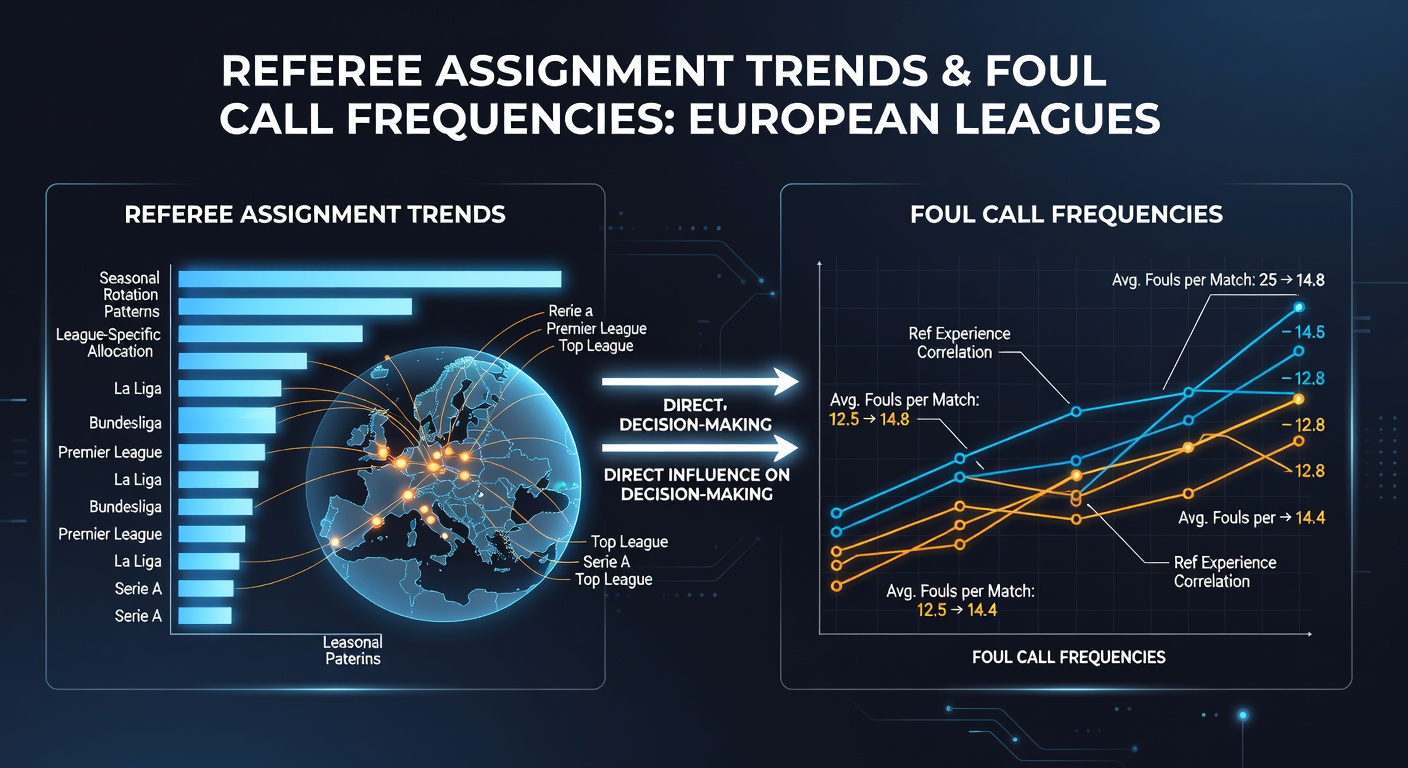
Referee assignments in major European football leagues follow structured processes that leagues and governing bodies refine each season, and data from recent campaigns shows measurable connections between who officiates and how many fouls get called. Assignments consider factors like experience level, geographic rotation, and performance metrics from prior matches, while foul frequencies vary noticeably depending on the referee's established patterns in different competitions.
Assignment Processes in Top Leagues
Leagues such as the Premier League, Bundesliga, La Liga, and Serie A maintain dedicated refereeing committees that review statistics on card issuance, foul detection rates, and consistency scores before each round of fixtures. These committees draw from pools of elite officials who complete fitness tests and attend regular training sessions focused on rule interpretation updates. Rotation policies prevent the same referees from handling multiple games involving the same clubs within short timeframes, and this approach creates diverse match environments where foul call rates shift based on individual referee tendencies.
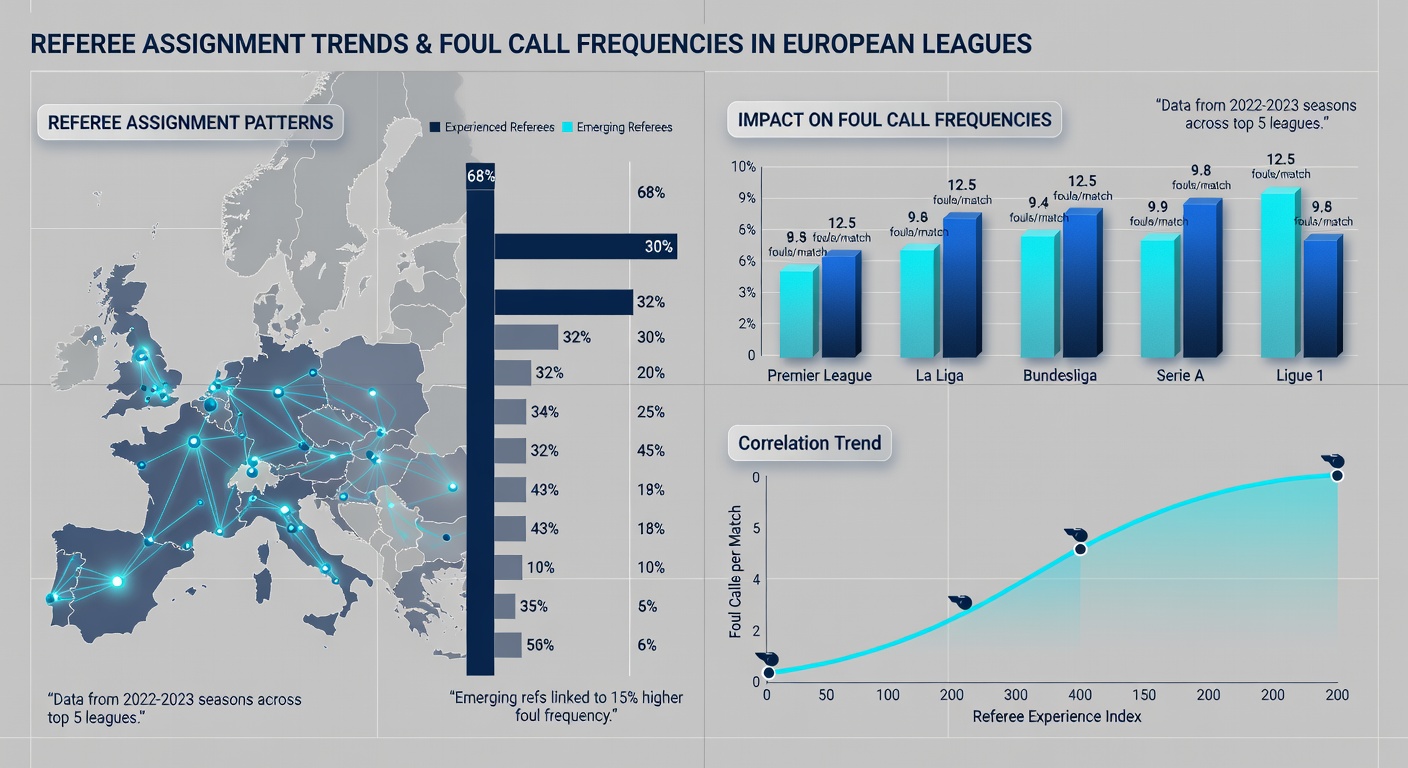
Observers note that Bundesliga officials, for instance, receive assignments that balance home and away games more evenly than some other leagues, while Serie A committees often prioritize referees with strong records in high-stakes derbies. Figures from the 2024-2025 season onward indicate that referees with over 100 top-flight matches logged tend to call fewer fouls per game on average compared to those newer to the elite level, although exceptions appear when specific tactical styles dominate play.
Patterns in Foul Call Data
Studies conducted by academic researchers at institutions across Europe have tracked foul calls across thousands of matches, and results reveal consistent referee-specific signatures that persist regardless of team identities. One analysis of Bundesliga matches between 2020 and 2025 found that certain officials averaged 22 fouls per game while others hovered around 28, with the difference correlating to their positioning habits and tolerance thresholds for physical challenges in midfield areas. Similar patterns emerge in La Liga where referees assigned to matches involving high-pressing teams issue more stoppages when their historical data shows stricter enforcement of shirt-pulling and obstruction rules.
VAR integration has added another layer since its wider rollout, yet the initial on-field decision still rests with the assigned referee, and this creates situations where foul frequencies depend heavily on the referee's willingness to consult pitch-side monitors. Data compiled through 2026 shows that referees who review incidents more frequently tend to increase total foul counts by reversing no-call situations into free kicks, particularly in leagues that emphasize detailed post-match feedback sessions for officials.
Regional Variations and Seasonal Shifts
European competitions display distinct regional signatures in referee behavior that assignment committees attempt to manage through cross-border exchanges. Matches in northern leagues often feature referees who allow more continuous play before intervening, whereas southern leagues show higher baseline foul rates even under the same assignment criteria. The 2025-2026 season introduced updated fitness and decision-speed benchmarks that several federations adopted simultaneously, and early data from June 2026 fixtures suggests these benchmarks have narrowed some gaps in foul call frequencies between leagues.
Teams that face the same referee multiple times in a campaign adapt their defensive approaches accordingly, and records indicate reduced foul counts when players recognize an official's preference for verbal warnings over immediate cards. This adaptation occurs most visibly in Serie A where repeat assignments happen more frequently due to smaller referee pools compared with the Premier League.
Influence of Experience and Background
Referees who progress through youth and reserve leagues before reaching the top division bring established call patterns that assignment trends either reinforce or attempt to moderate. Those with backgrounds in lower divisions tend to call more fouls early in their elite careers before adjusting to the faster pace and different physicality of top-flight play. European federations have implemented mentorship programs pairing newer officials with veterans, and statistics from these pairings show gradual convergence in foul frequencies over the course of a single season.
Geographic origin also plays a role since referees often receive initial assignments in their home regions before wider rotation begins. This staged approach allows committees to monitor how officials handle familiar stadium atmospheres before exposing them to away environments where crowd pressure might influence decision thresholds.
Recent Developments Through 2026
By June 2026 several leagues had expanded their use of performance analytics platforms that track referee movement, whistle timing, and card distribution in real time. These platforms feed directly into assignment decisions, and federations report that the resulting schedules aim to distribute referees with stricter foul-call profiles across matches where high foul rates have historically occurred. Cross-league data sharing between UEFA member associations has increased, allowing committees to identify officials whose styles align with specific competition demands such as tighter schedules or multiple midweek fixtures.
Training modules introduced in 2025 emphasize consistent application of advantage rules, and initial feedback from matches played under the new guidelines indicates modest reductions in unnecessary stoppages without compromising player safety standards. The changes reflect ongoing efforts by governing bodies to standardize certain aspects of officiating while preserving the individual judgment that defines each referee's contribution to match flow.
Conclusion
Referee assignment trends continue to shape foul call frequencies across European leagues through deliberate rotation policies, performance tracking, and evolving training standards. Data collected up to mid-2026 demonstrates that these assignments produce measurable variations in match statistics, and leagues maintain active systems to refine the process based on accumulated evidence from previous seasons. The relationship between official selection and game outcomes remains a central focus for federations seeking greater consistency while respecting the interpretive nature of football rules.