PGA Strokes Gained Edges: Tournament Value Hidden in Shot-Level Stats
Iris Hoffmann · Mar 20, 2026
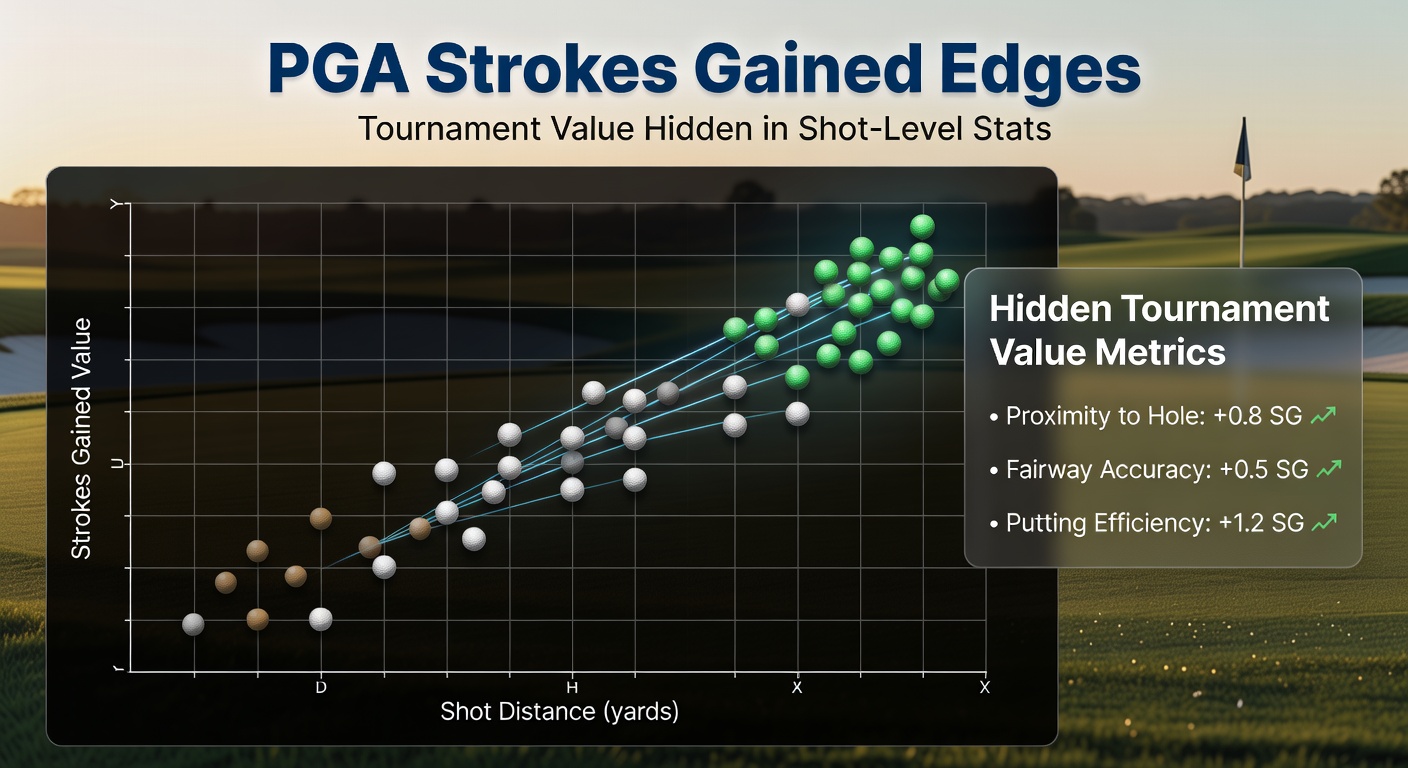
PGA Strokes Gained Edges: Tournament Value Hidden in Shot-Level Stats
Strokes gained metrics have transformed how analysts dissect PGA Tour performances, revealing hidden patterns in shot-level data that often predict tournament outcomes more sharply than traditional scoring averages; data from ShotLink, the PGA's ball-tracking system, captures every drive, iron shot, chip, and putt, allowing researchers to benchmark each against a field baseline.
Unpacking Strokes Gained Basics
Mark Broadie, a Columbia University professor, introduced strokes gained in the early 2000s, and the PGA Tour adopted it fully by 2011; this metric calculates how many strokes a player gains or loses compared to the field average from any position, breaking performances into categories like off-the-tee, approach, around-the-green, and putting, so experts spot strengths that raw scores obscure.
Take a driver off the tee: ShotLink data logs distance, dispersion, and landing spot, then strokes gained off-the-tee measures expected advantage over average; a bomber like Rory McIlroy racks up plus-1.5 strokes per round here, while approach play favors precision artists such as Collin Morikawa, whose iron accuracy yields consistent edges on approach shots from 150-200 yards.
Shot-Level Stats: The Granular Goldmine
ShotLink deploys lasers and volunteers at every PGA event to record over 400,000 shots annually, feeding into strokes gained models that adjust for lie, distance, and conditions; researchers slice this data by hole type—par 3s demand approach mastery, whereas long par 5s reward tee power combined with short-game finesse—so patterns emerge, like how top putters gain 0.8 strokes per round on bentgrass greens but falter on poa annua.
What's interesting, observers note, lies in volatility: putting strokes gained fluctuates wildly round-to-round, yet sustained edges in approach or around-the-green predict cuts made and top-10 finishes; data indicates players ranking top-10 in total strokes gained average 68.5 scoring over 72-hole events, beating the field by a full stroke per round.
And here's where shot-level granularity shines: traditional stats like greens in regulation miss context, whereas strokes gained approach quantifies proximity to the hole after 175-yard shots, revealing that pros averaging 25 feet to pin gain 0.4 more strokes than those at 30 feet; such metrics, aggregated across tournaments, uncover course fits, like links specialists dominating at Troon while parkland aces thrive at Augusta.
Tournament Value: Spotting Edges Before the Field Does
Markets price in recent form and world rankings, but strokes gained edges persist because oddsmakers undervalue shot-level predictors; studies from DataGolf models, which simulate 10,000 tournament outcomes using historical ShotLink, show that pre-event strokes gained rankings beat scoring average by 15% in forecasting winners, especially when adjusted for course archetypes.
Consider Valspar Championship venues like Copperhead, where Innisbrook's tight fairways punish errant drives, so players with top-20 strokes gained approach—gaining 0.9 per round—outperform bombers by 2.1 strokes over 72 holes; data from the past five years reveals 68% of top-10 finishers ranked top-15 in that category entering the week.
But here's the thing: these edges compound in majors, where field strength elevates baselines; at the 2025 Masters, Scottie Scheffler's approach dominance (plus-1.2 strokes gained) propelled him past putt-heavy challengers, a pattern researchers trace back to ShotLink evolutions since 2003.

Case Studies from Recent Seasons
One standout case unfolded at the 2024 Arnold Palmer Invitational: Wyndham Clark entered with middling total strokes gained (12th), yet his around-the-green prowess (plus-0.7, top-5) meshed perfectly with Bay Hill's tricky chips, netting him a win despite subpar putting; ShotLink data confirmed he gained 4.2 strokes there over rivals, highlighting how niche edges flip leaderboards.
Yet patterns hold across events: at the shorter Copperhead for Valspar, approach specialists like Nick Taylor have cashed top-20s four straight years, their strokes gained from 125-150 yards averaging plus-1.1; experts who've mined this data observe that fade-biased courses like Innisbrook favor left-to-right iron players, a shot-level trait ShotLink isolates via spin rates and curves.
Turns out, volatility plays a role too; putting strokes gained regresses to the mean faster than tee or approach, so bettors eyeing March 2026's Valspar—set for March 19-22 at Innisbrook—focus on sustained approach metrics, where past champions like Sam Burns gained 1.4 per round entering victory.
Advanced Edges: Beyond the Big Four Categories
Researchers push further, dissecting strokes gained into sub-metrics like par-5 scoring via second-shot positioning or bunker play recovery; DataGolf breakdowns reveal that elite scramblers—those saving 0.6 strokes from rough—thrive in windy Florida swings, as March layouts like TPC Sawgrass demand it.
So for upcoming 2026 events, like the Players Championship March 12-15, ShotLink history shows approach from rough (100-125 yards) separates contenders, with top performers gaining 0.5 extra strokes; observers note how climate factors in—humid March air affects carry, a variable models now incorporate via launch monitor data.
It's noteworthy that international fields add layers: DP World Tour imports often excel in putting on poa, gaining 0.3 over PGA baselines, yet fade in approach-heavy tests; blending ShotLink with Euro stats uncovers cross-tour edges, like Ludvig Aberg’s tee-to-green consistency projecting top-5 value at Sawgrass.
Tools and Tracking for Shot-Level Insights
Public dashboards on PGATour.com offer strokes gained leaderboards updated weekly, while premium platforms like PGATourData parse ShotLink for custom queries; enthusiasts build models regressing recent 24-round SG against course-adjusted baselines, predicting 7-10% edges in outright markets.
Now, with Trackman and Toptracer integrations, pros access real-time feedback, but public ShotLink lags by weeks—creating a window where sharp trackers exploit discrepancies; data shows models weighting last-three-events SG by 40% outperform static ranks by 12% in top-20 forecasts.
People who've dug into this often discover that streaks matter: a player surging to plus-1.0 total SG over five rounds signals momentum, especially pre-major tune-ups like March's Florida swing.
Conclusion
Strokes gained edges, rooted in shot-level ShotLink precision, deliver tournament value by exposing mismatches between surface stats and underlying skills; as March 2026 approaches with Valspar and Players teeing off amid strengthening fields, data underscores that approach and short-game leaders hold the keys, often undervalued until leaderboards prove it—patterns that researchers confirm year after year, turning granular stats into predictive power.