Mapping Injury Recovery Timelines Against Squad Rotation Demands in Multi-Week Tournament Calendars
Amir Günther · Aug 19, 2026
Mapping Injury Recovery Timelines Against Squad Rotation Demands in Multi-Week Tournament Calendars
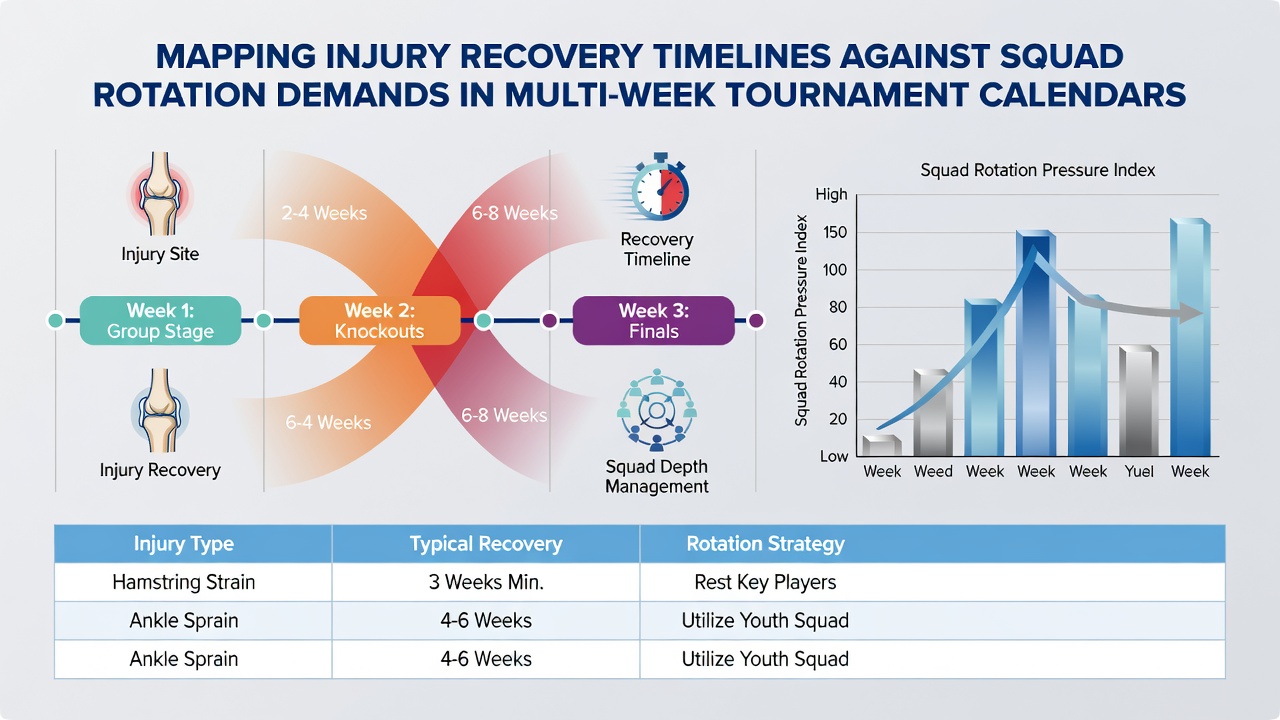
Coaches and medical staff track recovery timelines against rotation needs when tournaments stretch across several weeks, and this process shapes how squads manage player availability from group stages through knockout rounds. Research from sports science institutions shows common football injuries like hamstring strains require 2 to 4 weeks for full return while ankle sprains often resolve in 1 to 3 weeks depending on severity grades.
Key Elements of Recovery Timelines
Studies compiled by researchers at the Australian Institute of Sport indicate that muscle injuries account for over 30 percent of time lost in elite competitions, and these figures become critical when calendars extend beyond four weeks. Teams compile databases that list expected recovery windows for each injury type, then cross-reference those windows with fixture lists that include rest days between matches.
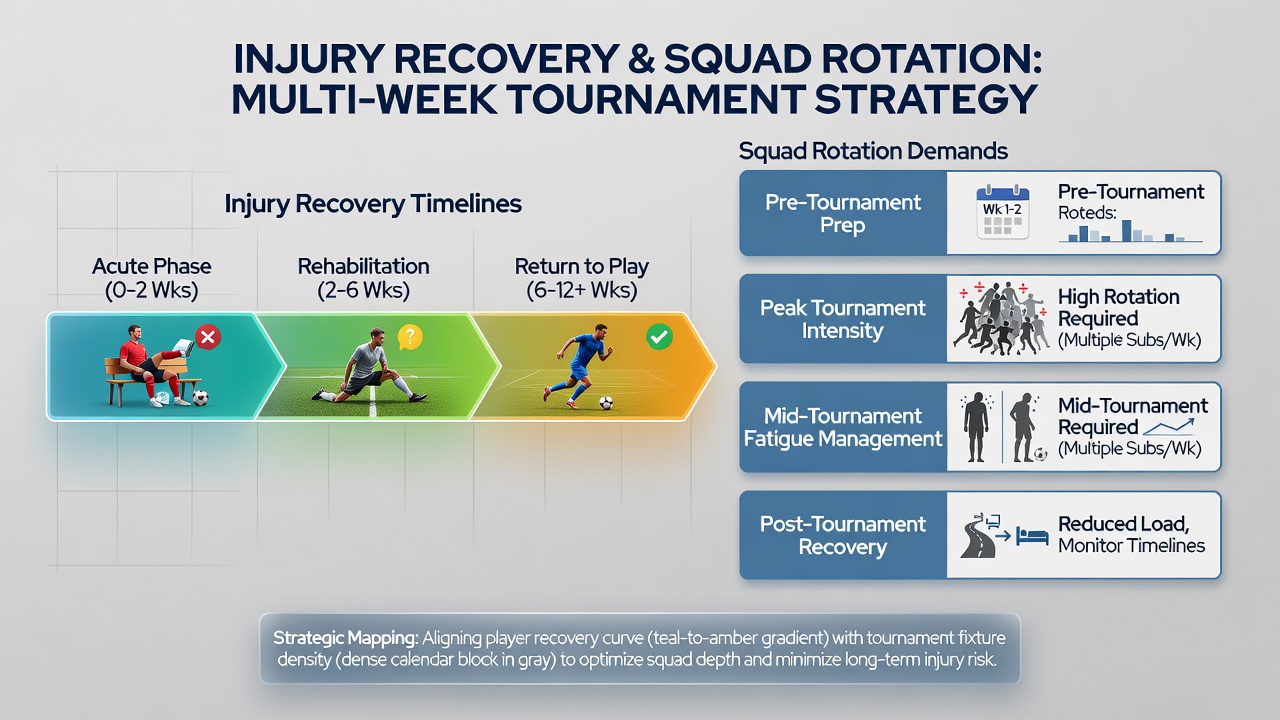
Rehabilitation protocols advance through phases that include initial protection, controlled loading, and sport-specific drills, while staff monitor markers such as strength symmetry and movement quality before clearance. Data from UEFA medical reports reveal that players who miss more than two weeks during a tournament face elevated re-injury risks upon return, prompting rotation schedules that limit minutes in subsequent games.
Squad Rotation Strategies Across Extended Calendars
Managers build rotation plans that distribute playing time across defensive, midfield, and attacking units, and these plans adjust when recovery projections shift due to setbacks during rehabilitation. In the 2026 FIFA World Cup scheduled for June and July, teams will navigate seven matches across roughly five weeks if they reach the final, which forces continuous re-evaluation of available personnel.
Rotation decisions rely on workload metrics that include distance covered, high-speed running, and accelerations recorded in each appearance. Analysts feed these numbers into software platforms that flag players approaching cumulative fatigue thresholds, allowing substitutions before injuries occur. One longitudinal study published in the British Journal of Sports Medicine tracked 1,200 professional players and found that squads maintaining at least 60 percent rotation depth experienced 25 percent fewer soft-tissue injuries during multi-week events.
Integration of Recovery Data With Tournament Scheduling
Medical teams overlay recovery timelines onto tournament brackets that list exact match dates and travel requirements, creating visual maps that highlight conflict zones where players may not be ready. When a midfielder sustains a grade-two calf injury three days before a quarter-final, staff compare the projected 10-to-14-day recovery against remaining fixtures and decide whether to retain the player on the roster or call up a replacement.
August 2026 will see several national federations release post-tournament reviews that detail how rotation matrices performed against actual injury occurrences. These reviews often compare predicted availability percentages with observed figures, and discrepancies inform updates to future planning models. Clubs that compete in both domestic leagues and international tournaments apply similar mapping techniques to bridge gaps between seasons.
Challenges in Real-Time Adjustment
Unexpected complications such as delayed healing or secondary issues can compress available options, forcing coaches to accelerate younger players or shift formations. Communication between physios, performance analysts, and coaching staff occurs daily through shared dashboards that update recovery percentages and projected match readiness. FIFA technical reports from previous editions note that teams reaching later stages rotate an average of 3.2 players per match compared with 1.8 in early rounds, reflecting the cumulative effect of fixture congestion.
Weather conditions, pitch quality, and travel fatigue add further variables that influence both injury likelihood and recovery speed. Staff incorporate these factors into algorithms that recalculate risk scores after every session, ensuring rotation decisions remain evidence-based rather than intuitive.
Conclusion
Effective mapping of injury recovery timelines against squad rotation demands requires integrated data systems, clear communication protocols, and ongoing adjustment throughout multi-week tournaments. Federations and clubs continue to refine these processes using evidence from past events, and the 2026 calendar will provide additional datasets for analysis. Those who study the patterns observe that precise alignment between medical timelines and rotation plans correlates with sustained squad availability across extended competitions.