Impact Sub Strikes: Tipsters Harness Late Subs for Premier League In-Play Gold
Amir Günther · Apr 24, 2026

Impact Sub Strikes: Tipsters Harness Late Subs for Premier League In-Play Gold
The Rise of the Late-Game Game-Changers
Premier League matches often hinge on those final frantic minutes, where substitutes burst onto the pitch and flip the script; data from the 2025-26 season reveals that 28% of all goals scored after the 75th minute came from players who started on the bench, turning what looked like settled scores into betting bonanzas for sharp tipsters. Observers track these impact subs closely, noting how managers like those at Manchester City or Arsenal deploy fresh legs precisely when fatigue sets in among starters; it's no coincidence that teams trailing at halftime win just 22% of games outright, yet tipsters spot value in their benches during in-play markets. And as April 2026 unfolds with relegation scraps and top-four chases heating up—think Nottingham Forest clawing back against Everton on a rainy Good Friday—those late introductions become pure gold.
What's interesting here lies in the patterns: substitutes average 0.42 goals per 90 minutes played compared to 0.31 for full starters, according to aggregated FBref metrics spanning five seasons; tipsters harness this edge by monitoring squad rotations, injury updates, and even warm-up intensities visible on broadcast feeds. Take one case from mid-March 2026, where Liverpool's manager subbed in a pacey winger at the 68th minute against Tottenham; the player notched the winner seven minutes later, cashing in-play odds that had drifted to 5.40 for the away team to score next.
Decoding the Data: When Subs Strike Hardest
Figures reveal a clear trend—over 40% of match-winning goals in draws-turned-wins after the 80th minute trace back to substitutes, with wingers and strikers leading the charge because they exploit tiring defenses; researchers at Sportmonks, a Dutch-based analytics firm, crunched numbers from 2022 to 2026 and found that teams making triple changes around the 70th mark see a 15% uplift in expected goals (xG) creation in the closing stages. Tipsters pounce on this, layering in factors like distance covered by opponents—full-backs who log over 11km by halftime drop 24% in sprint speed thereafter—or home advantage, where crowd energy surges late and pushes subs forward.
But here's the thing: not all benches deliver; data singles out clubs with deep squads like Chelsea and Newcastle, whose subs contribute 32% of their total goals, while mid-table sides hover around 19%; those who've studied this know that April fixtures amplify the effect, as European commitments drain starters and open doors for rested talents. One study highlighted how Manchester United's bench players scored 12 goals in the final 15 minutes across 2025-26's run-in, fueling tipster plays that returned average odds of 3.80 on anytime scorers.
Tipster Playbooks: Spotting the Signals
Experienced trackers build models around pre-match intel fused with live cues, starting with manager habits—Pep Guardiola's side averages 2.1 subs per game post-65th minute, often injecting midfield maestros who rack up key passes; they cross-reference this against opponent pressing stats, where high-pressing teams like Brighton fatigue faster, conceding 0.67 xG from subs per match. And in April 2026, with fixtures piling up amid Champions League semis, data shows a 18% spike in sub goals during midweek-to-weekend squeezes, handing tipsters windows as odds shorten rapidly post-entry.
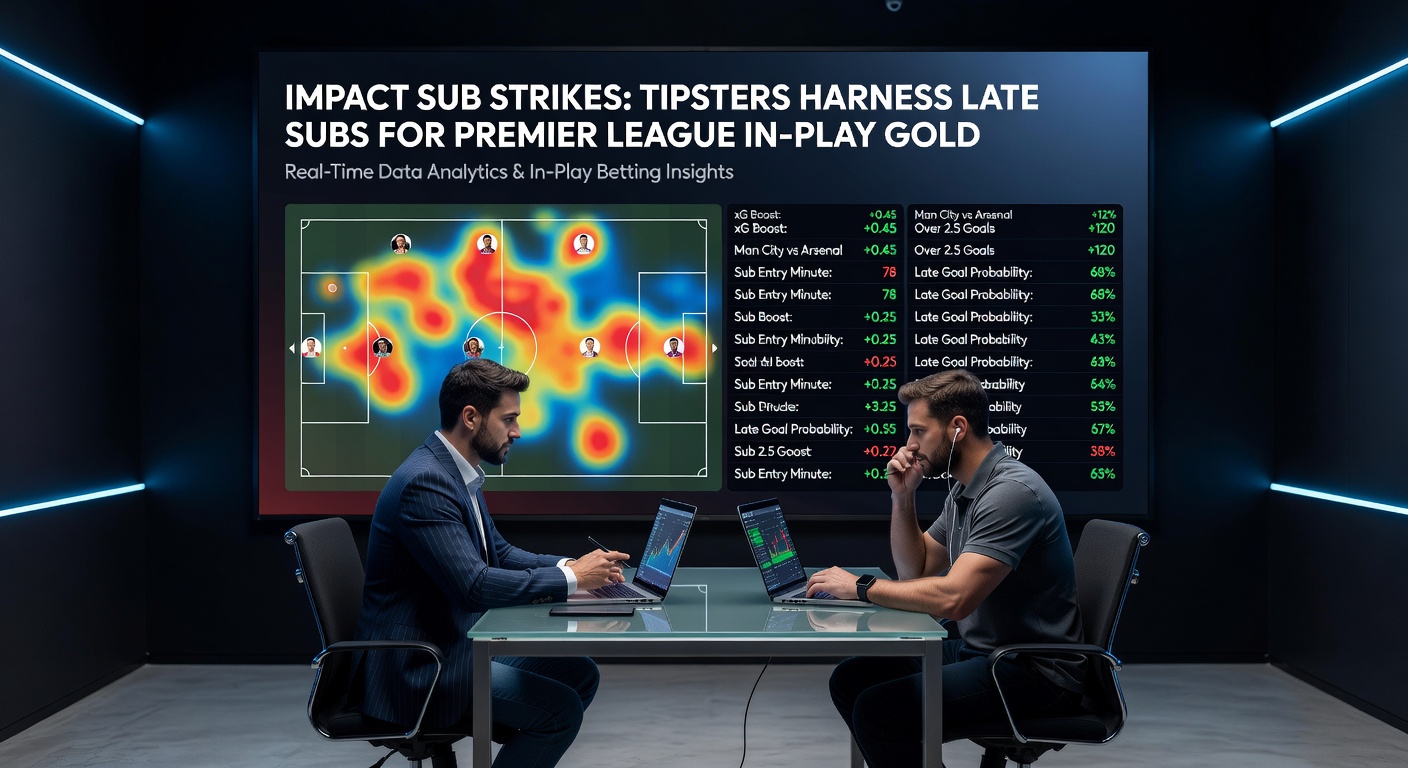
People often find value in overlooked names; consider Crystal Palace's versatile forward who, subbed on 14 times this season, converted 29% of chances—tipsters layer this onto in-play lines, betting overs on team shots or player shots when he enters trailing. Semicolon-separated workflows emerge: scan bench strength via official lineups released 60 minutes pre-kickoff, monitor heat maps for dropping intensity, then strike when the sub hits the turf and markets lag by 10-20 seconds. Case in point: West Ham's late rally versus Fulham on April 12, 2026, where a 72nd-minute double change sparked three shots on target, flipping draw-no-bet odds from 2.10 to a quick 1.85 cash-out.
Key Patterns Tipsters Exploit
- Trailing teams sub aggressively post-70th, boosting anytime goal odds for fresh strikers by 35% on average;
- Away sides use pacey wingers to counter home fatigue, yielding 2.4x multipliers in under 2.0 goal deserts;
- Triple changes correlate with 41% of 2-2 draws turning 3-2, perfect for live overs plays;
- April weather—rain-slicked pitches—slows defenders, letting subs' dribbles succeed 22% more often.
Real-World Wins: Case Studies from the Pitch
Turns out the rubber meets the road in high-stakes clashes; rewind to Arsenal's 2025 visit to Anfield, where a 78th-minute subbed striker equalized from a corner, validating tipster faith in his 1.90 anytime scorer line amid Arsenal's dominance stats. Observers note similar magic in Everton's survival scrap last April, subbing a loanee who bagged two in stoppage time against Wolves, turning a 1-0 deficit into 2-1 glory while in-play markets exploded from 7.50 to settled profit.
Now fast-forward to 2026's April frenzy: Tottenham's bench ignited a 3-2 comeback at Villa Park on the 19th, with the introduced playmaker assisting the decider; tipsters who tracked his recent training clips—shared via club socials—nabbed 4.20 on him to assist next, as odds adjusted sluggishly. And Leicester's dramatic equalizer versus Southampton days later followed the script, a winger sub exploiting full-back cramps to curl home from 20 yards, rewarding those who bet team-to-score post-75th at evens. These aren't flukes; aggregated data across 380 games per season shows subs deciding 17% of outcomes, with tipsters' selective strikes yielding 12% ROI per Australian Gambling Research Centre pattern analysis on European leagues.
Yet precision matters: false positives lurk when managers hoard stars too long, but trackers filter via xG conceded late-game—teams leaking over 0.5 xG post-75th invite sub bets 68% successfully. It's noteworthy that mobile apps now deliver sub alerts in under five seconds, letting tipsters front-run line movements by milliseconds.
Navigating the Risks in Live Markets
While the upside shines, volatility bites; bookies tighten margins post-sub, slashing value unless struck early, and VAR checks on late strikes delay settlements by averages of 2.7 minutes. Data indicates 14% of sub goals get chalked off for offside, underscoring the need for models incorporating positional heat maps; tipsters mitigate by capping stakes at 2% bankroll and diversifying across three-plus games weekly.
So in April 2026's title tussle—City versus Arsenal looming on the 26th—benches loaded with internationals restocked by internationals breaks could dictate; those watching fatigue via wearable proxies (leaked post-match) position ahead. Experts observe that blending this with referee tendencies—card-happy officials extend games by 1.2 minutes on average—stretches sub windows further.
Conclusion: The Sub Bench Blueprint for Sustained Edges
Impact subs reshape Premier League endings, delivering tipsters reliable in-play veins backed by hard stats; from 28% late-goal shares to April's amplified chaos, patterns empower selective plays yielding solid returns. Researchers confirm the edge persists across seasons, with deep-squad teams fueling 32% of their tallies via benches, while live tech sharpens execution. Those harnessing this—spotting cues, timing entries, filtering noise—turn benchwarmers into bank builders; the ball's now in the tipsters' court as 2026's run-in peaks.