Fixture Congestion Patterns That Inform Rotation Bets in Multi-League Calendars
Iris Hoffmann · Jul 1, 2026
Fixture Congestion Patterns That Inform Rotation Bets in Multi-League Calendars
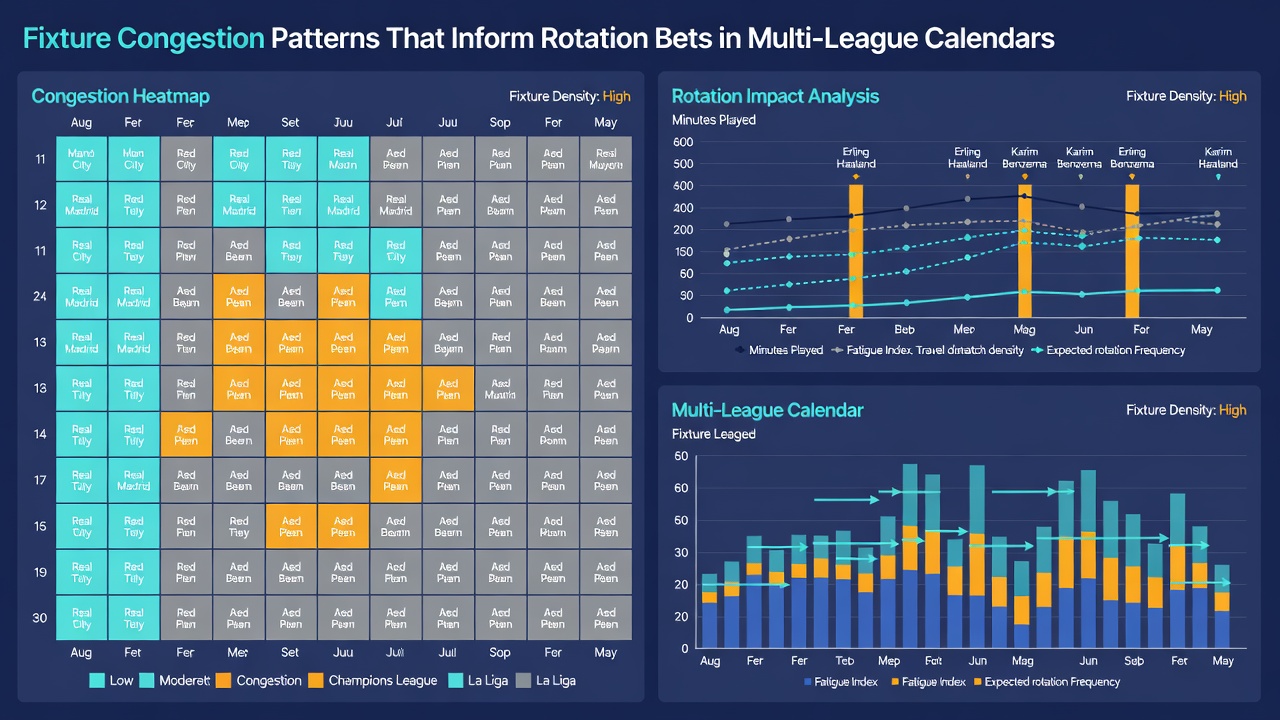
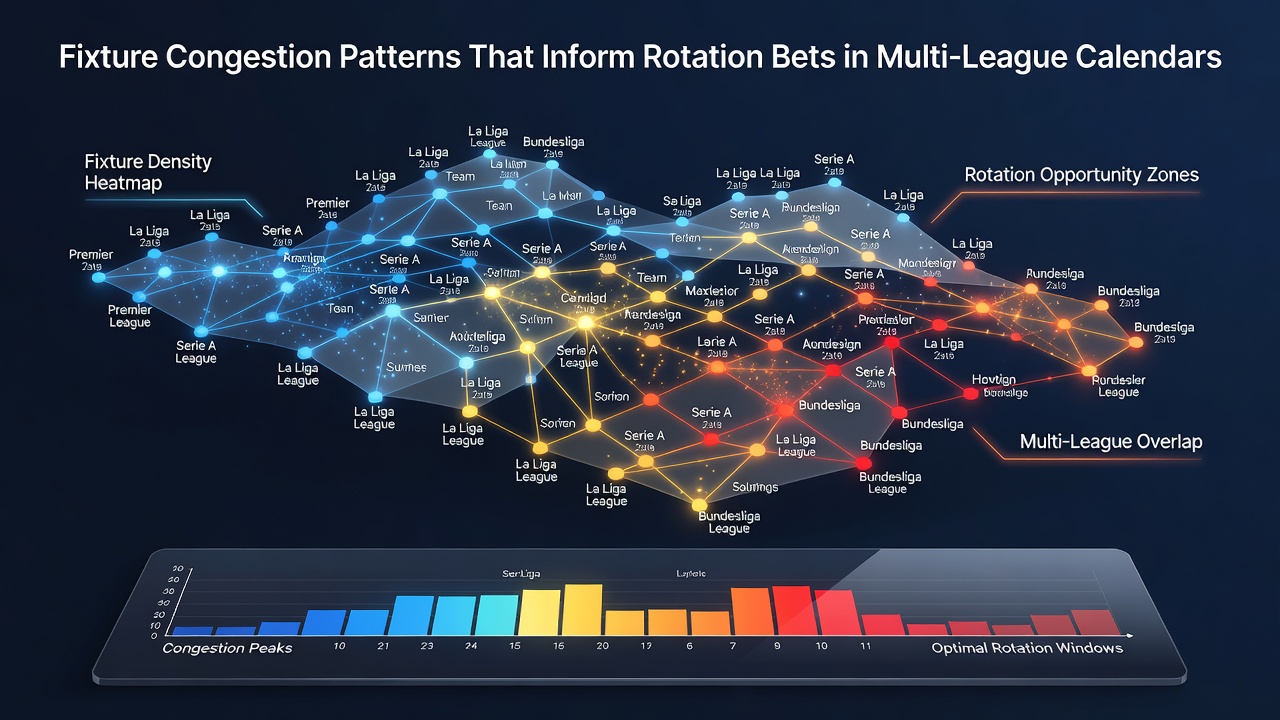
Fixture congestion arises when clubs compete in multiple domestic and international competitions simultaneously, creating clusters of matches within short timeframes that force managers to manage player workloads. In leagues such as the English Premier League, La Liga, and Serie A, teams often juggle league fixtures alongside Champions League or Europa League ties plus domestic cups, resulting in sequences where squads play every two or three days for extended periods. Observers note that these patterns become most pronounced between September and December, when European group stages overlap with league campaigns, and again in February and March during knockout phases. Data from the 2024-2025 season shows that Premier League clubs averaged 2.8 matches per week during peak congestion windows, according to figures compiled by the European Club Association. Similar workloads appeared in the Bundesliga and Ligue 1, where travel distances add further strain. Researchers at the University of Melbourne examined recovery intervals across five major European leagues and found that squads with fewer than four days between games recorded a 12 percent drop in high-intensity running output compared with standard rest periods. Rotation decisions follow recurring patterns that analysts track across competitions. Managers typically rest key players after midweek European away fixtures, especially when the next opponent sits lower in the table or plays at home. Records indicate that starting lineups change by an average of 3.2 players in such scenarios, with central midfielders and full-backs rotated most frequently because of their high physical demands. Those adjustments alter expected goal metrics and set-piece dynamics, creating measurable shifts that betting markets sometimes price in slowly.Calendar Structures Driving Congestion
Multi-league calendars follow predictable rhythms shaped by television scheduling and international windows. The 2025-2026 schedule placed several Premier League clubs in three competitions within an eight-day span in October, while La Liga teams encountered comparable clusters during Copa del Rey rounds. July 2026 marks the start of pre-season preparations following the FIFA World Cup, with several leagues adjusting winter breaks to accommodate the expanded tournament calendar; this realignment compresses spring fixtures and increases the likelihood of back-to-back European and domestic matches in April. Analysts examine historical sequences where teams play four matches in twelve days and identify consistent performance differentials. Home sides coming off European travel win at lower rates when facing rested opponents, while away teams that rotate heavily often concede more shots from set pieces. These patterns hold across multiple seasons and appear in both top-five leagues and secondary competitions such as the Portuguese Primeira Liga and Dutch Eredivisie.