Decoding Wind Vector Impacts on Serve Percentages Across Professional Tennis Circuits
Anna Peters · Aug 26, 2026
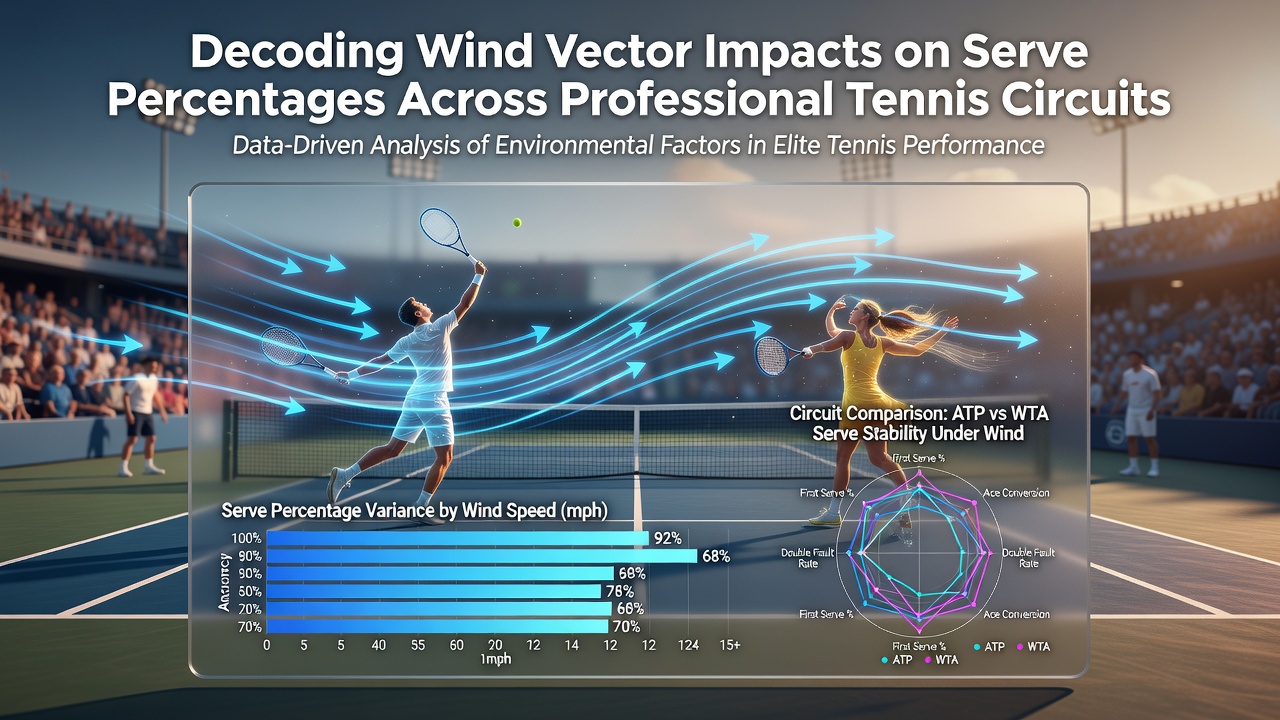
Decoding Wind Vector Impacts on Serve Percentages Across Professional Tennis Circuits
Professional tennis circuits present unique challenges when wind vectors shift across outdoor venues, and analysts track how these patterns alter serve percentages in ATP and WTA events. Wind speed and direction combine to create headwinds, tailwinds, and crosswinds that modify ball flight paths, and researchers from sports science programs have documented measurable drops in first-serve accuracy during gusty conditions at venues such as the Australian Open and Wimbledon. Data from match tracking systems reveal that players adjust toss heights and swing paths to compensate, yet overall ace rates decline when sustained winds exceed 15 kilometers per hour.
Wind Vector Mechanics and Serve Dynamics
Wind vectors describe both magnitude and direction, and meteorologists supply on-site readings that correlate directly with ball trajectory models used by coaching staffs. A headwind slows the ball's forward momentum after contact, which shortens the effective service box margin and forces players to reduce spin rates to maintain depth, according to studies conducted by the International Tennis Federation technical team. Crosswinds push the ball laterally during the 0.6-second flight time from racket to court, and players on the receiving end often report wider returns when gusts align perpendicular to the baseline. Tailwinds accelerate the ball beyond typical velocities, which can increase fault percentages on second serves because the margin for error shrinks at the baseline.
Equipment sensors attached to rackets capture spin and velocity changes, and these readings show consistent patterns across hard-court and grass surfaces where wind exposure remains highest. Clay courts offer slightly more stability because the slower bounce allows additional reaction time, yet serve percentages still fluctuate when vectors shift mid-match. Observers note that tournament organizers in regions with frequent coastal breezes install anemometers at multiple court locations to provide real-time data feeds for players and officials.
Circuit-Specific Patterns in Serve Statistics
ATP and WTA records indicate that serve percentages vary by surface and tournament location, with outdoor events showing larger deviations during windy periods. Grand Slam data compiled over multiple seasons demonstrate that first-serve points won drop by an average of 4 to 7 percentage points when average wind speeds reach moderate levels, whereas indoor events maintain steadier figures because air movement stays minimal. Researchers tracking serve locations find that players target wider angles more frequently in crosswind scenarios to exploit the lateral push, and this adjustment appears in both men's and women's draws at events held in North America and Europe.
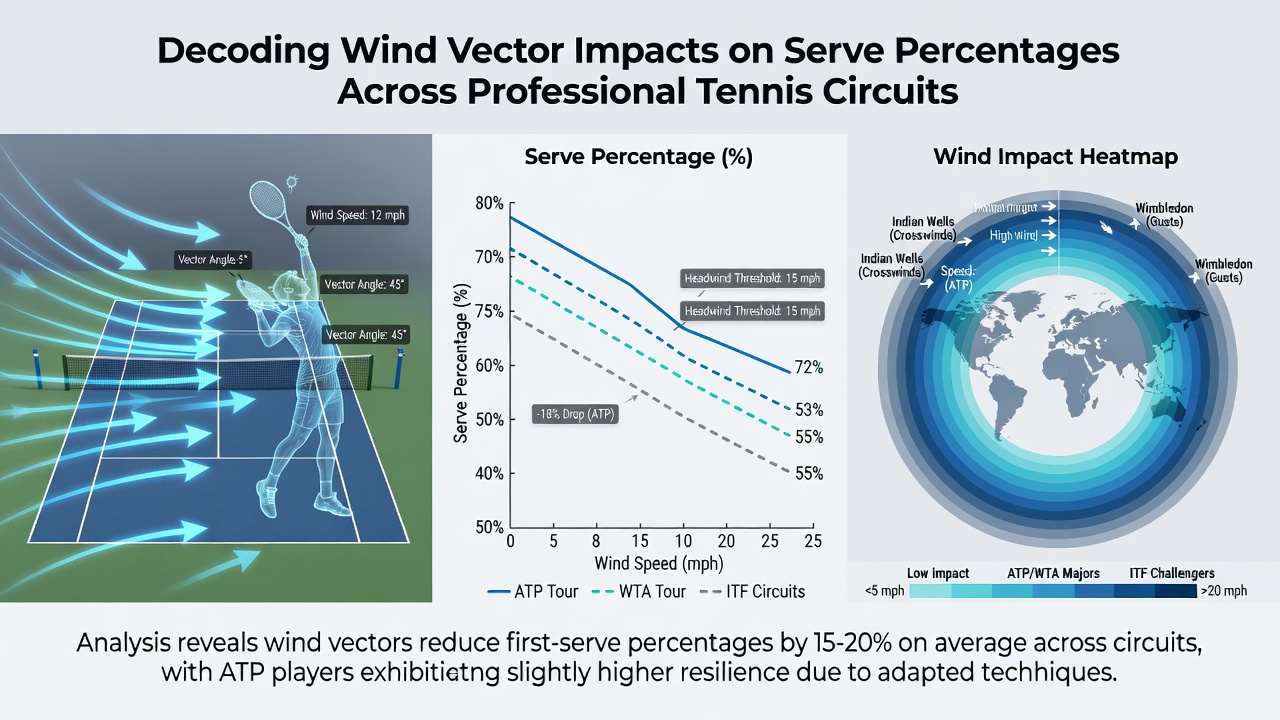
European circuits encounter prevailing westerly winds that align differently with court orientations at venues such as Roland Garros and the Italian Open, and analysts compare these conditions against Australian summer events where northerly gusts dominate. North American hard-court tournaments experience variable lake-effect winds that create sudden directional changes, and performance databases show elevated double-fault counts during afternoon sessions when thermal currents intensify. Those who review Hawk-Eye data across these circuits observe that second-serve percentages remain more resilient than first-serve numbers because players reduce risk on the follow-up delivery.
Data Collection Methods and Performance Correlations
Match analytics platforms integrate wind measurements with ball-tracking coordinates, and this combination produces granular reports that coaching teams review between sets. Studies published through university sports laboratories link specific vector angles to changes in serve speed and placement consistency, with findings indicating that diagonal winds produce the most pronounced effects on left-handed servers because their natural spin interacts differently with lateral forces. Figures from the 2025 season onward continue to accumulate as new sensor technology records finer details, and comparisons across surfaces confirm that grass courts amplify wind influence due to faster ball speeds overall.
Performance analysts examine historical match files to identify players whose serve percentages remain stable across wind conditions, and these profiles help schedulers anticipate outcomes at exposed outdoor sites. Training regimens now incorporate wind simulation machines that replicate vector shifts, allowing players to practice toss adjustments before traveling to tournaments where such variables occur regularly. Data from these sessions feed into larger databases maintained by regional tennis federations, which share aggregated statistics with event organizers to refine court scheduling during forecast periods of elevated winds.
Conclusion
Wind vector analysis continues to shape preparation strategies across professional tennis circuits as tracking systems grow more precise. Serve percentages respond to directional and speed changes in predictable ways, and circuit-wide data sets provide the foundation for ongoing adjustments in technique and scheduling. As outdoor events maintain their prominence in the calendar, integration of meteorological inputs with performance metrics supports more accurate evaluations of player output under variable conditions.