Charting the Effects of Time Zone Shifts on Team Dynamics in Transcontinental Basketball Contests
Amir Günther · Aug 7, 2026
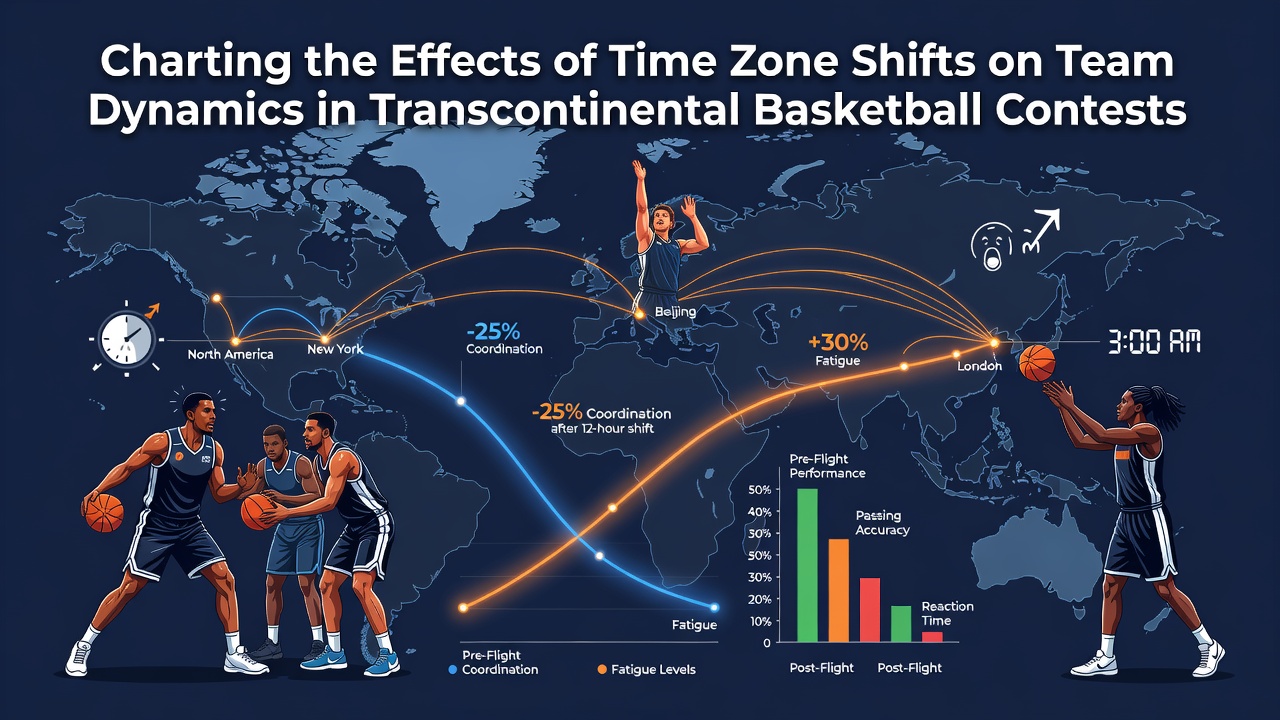
Charting the Effects of Time Zone Shifts on Team Dynamics in Transcontinental Basketball Contests
Transcontinental basketball contests require teams to cross multiple time zones, which alters sleep patterns and coordination among players. Research from circadian rhythm studies shows that shifts of three or more hours disrupt internal clocks, leading to measurable changes in reaction times and decision-making during games. Data collected from NBA schedules between 2023 and 2025 indicates that teams traveling eastward experience greater performance dips compared with westward journeys because the body clock advances rather than delays.
Physiological Adjustments During Travel
Players crossing from the Pacific to Eastern time zones often face compressed recovery windows, since games scheduled for evening local time occur when their bodies expect rest. Studies published by the National Institutes of Health track melatonin levels and core body temperature in athletes after such flights, revealing slower adaptation rates that persist for up to five days. West Coast teams arriving in New York for back-to-back contests show elevated fatigue markers in blood samples drawn 24 hours post-arrival, while coordination drills reveal increased error rates in passing sequences and defensive rotations.
Team Dynamics Under Circadian Pressure
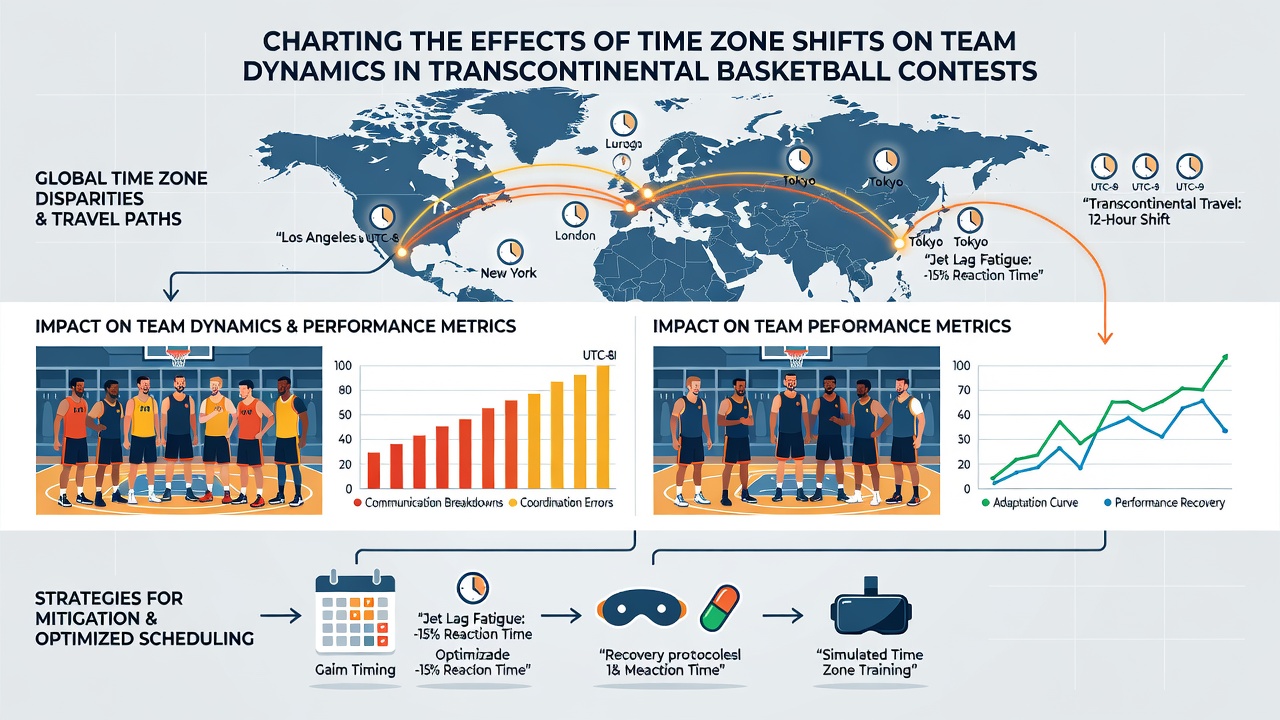
Communication within squads changes noticeably when jet lag sets in. Observers note that verbal cues become less precise during the first two quarters, and players rely more on visual signals that can break down under defensive pressure. A review of game footage from the 2024-2025 season highlights how units accustomed to West Coast timing struggle to maintain spacing when their internal clocks lag, resulting in higher turnover counts in transition plays. Coaches adjust substitution patterns earlier in these contests because bench players acclimate at different speeds than starters who logged heavy minutes the night before.
Evidence from International and Domestic Schedules
Transatlantic contests add another layer because European time zones sit six to nine hours ahead of most NBA cities. Teams that competed in exhibition games in August 2025 against EuroLeague clubs recorded sleep logs showing fragmented rest on the return flight, with recovery timelines extending into the regular season opener. Researchers at the University of Melbourne documented similar patterns in Australian national team players traveling to North American tournaments, where rebounding percentages dropped by measurable margins in the opening periods before stabilizing later in the schedule. These findings align with data from the 2026 NBA calendar, which includes additional early-season cross-country trips that begin in late August for some clubs preparing for international preseason events.
Adaptation Strategies Employed by Staff
Teams implement structured light exposure protocols and adjusted meal timing to accelerate realignment. Training staffs shift practice sessions to match destination time zones days before departure, while nutritionists emphasize hydration and timed caffeine intake. Video analysis from the 2025-2026 campaign shows that squads using these methods maintain higher assist-to-turnover ratios in the first half of away games compared with those relying on standard travel routines. Defensive schemes also evolve because coaches anticipate slower rotations early and compensate with zone coverage that reduces the need for rapid help positioning.
Longer-Term Patterns Across Seasons
Over multiple seasons, organizations compile internal databases that correlate travel distance with advanced metrics such as effective field goal percentage and defensive rating. These records reveal consistent trends where teams crossing two or more zones post lower win percentages in the immediate follow-up game, yet the gap narrows when return travel occurs after a full day of rest. Analysts tracking these statistics emphasize that younger rosters sometimes recover faster physiologically, whereas veteran groups benefit from experience in managing pre-game routines that preserve focus despite disrupted sleep.
Conclusion
Time zone shifts continue to influence how basketball teams coordinate on both ends of the floor during transcontinental matchups. Ongoing monitoring through wearable devices and performance tracking provides clearer pictures of adaptation timelines, allowing staff to refine travel and preparation protocols. As schedules incorporate more international components around August 2026, these insights will guide adjustments that support consistent execution across varying time zones.