Altitude's Quiet Influence on Scoring Dynamics and Betting Lines for Mountain-Based Matches
Yves Werner · Aug 21, 2026
Altitude's Quiet Influence on Scoring Dynamics and Betting Lines for Mountain-Based Matches
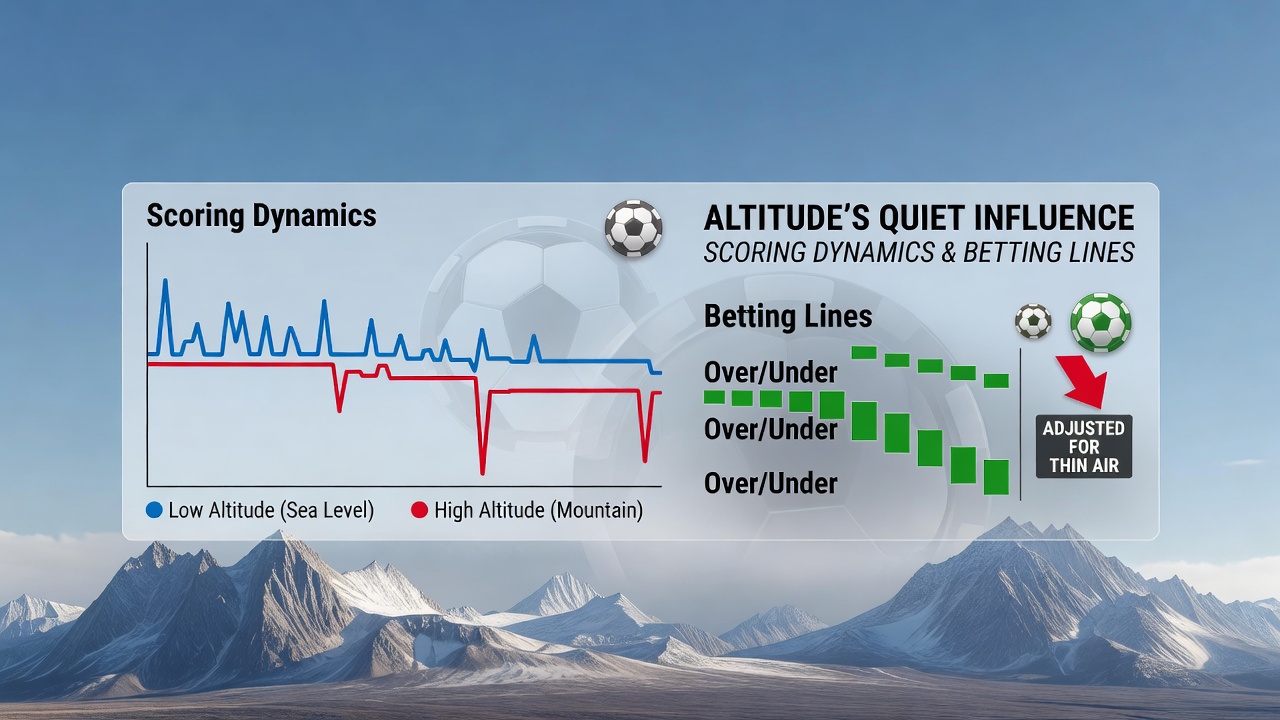
High-altitude venues create measurable shifts in how athletes perform and how scoring unfolds across multiple sports, which in turn shapes the betting markets that surround those contests. Researchers have tracked these patterns through data collected from locations such as Denver, Mexico City, and Johannesburg, where reduced oxygen availability and thinner air alter both endurance and the physics of the ball or puck. Those who've examined match logs note that totals often move in predictable directions once teams adapt to the conditions, prompting oddsmakers to recalibrate lines ahead of scheduled fixtures.
Physiological Effects on Players and Teams
Lower oxygen levels at elevations above 1,500 meters force the body to work harder to maintain output, and studies from the University of Colorado Boulder show that aerobic capacity drops by roughly 10 to 15 percent for athletes arriving from sea level. This reduction manifests in faster fatigue during the later stages of games, particularly in soccer and basketball where continuous movement dominates. Teams that train at altitude for several days before an away fixture demonstrate smaller drops in high-intensity efforts, according to performance records compiled by the Australian Institute of Sport. Those adjustments appear in reduced sprint distances and fewer defensive recoveries as matches progress into the final quarter or extra time.
Changes in Ball Flight and Scoring Patterns
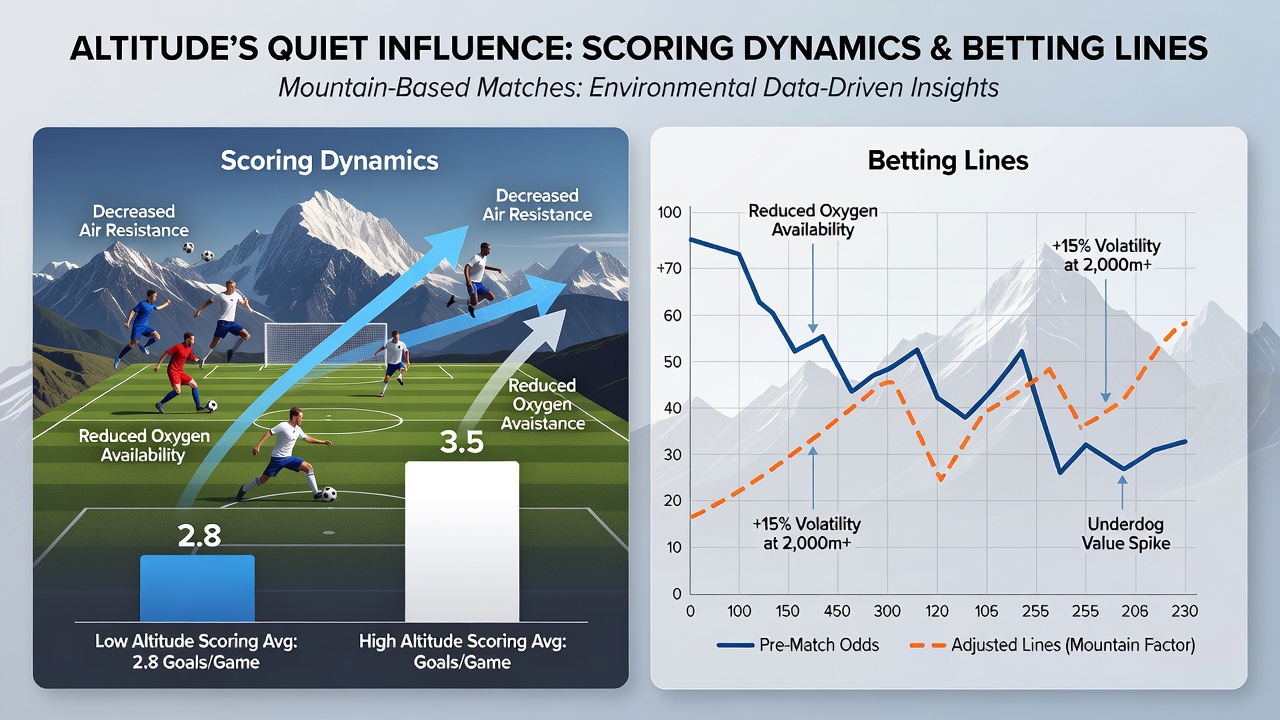
Thinner air reduces drag on projectiles, allowing soccer balls and basketballs to travel farther and faster than they would at sea level. Data collected from Liga MX matches in Mexico City indicate that average shot distances increase by nearly two meters compared with games played below 500 meters, which contributes to higher goal tallies in some seasons. In the NBA, Denver Nuggets home games have shown elevated three-point percentages in multiple seasons, a pattern tied to the reduced resistance that keeps arc shots on line more consistently. Observers note that these dynamics do not always produce higher totals, because defensive schemes also tighten when players tire, creating a balance that oddsmakers must weigh carefully when setting opening lines.
Betting Market Adjustments and Line Movement
Bookmakers monitor historical scoring averages at mountain venues and apply adjustments that reflect both the venue and the travel schedules of visiting squads. In August 2026, several international friendlies scheduled in Andean stadiums will test how quickly European clubs adapt, and early lines for those matches already incorporate data from prior tours. Sharp bettors track public money that often overvalues offensive output without accounting for acclimatization periods, which creates brief windows where under totals hold value. Figures released by regulatory bodies in Nevada reveal that totals markets at altitude venues see higher handle percentages than comparable sea-level games, reflecting the uncertainty that surrounds final scores.
Case Examples Across Different Leagues
The Colorado Rockies have posted some of the highest run environments in Major League Baseball history at Coors Field, yet visiting pitchers who throw breaking balls with pronounced movement sometimes limit damage because the thinner air flattens those pitches less dramatically. Soccer matches in Quito, Ecuador, at over 2,800 meters have produced goal rates that fluctuate based on whether the home side fields a roster already adapted to the conditions. Researchers discovered that teams returning from sea-level trips suffer larger dips in possession retention, which opens counter-attack opportunities that betting models incorporate when projecting player props. Those who've reviewed decades of box scores find that first-half totals often stay under while second-half numbers climb once fatigue sets in for the visitors.
Training and Preparation Strategies
Clubs and national teams now schedule acclimatization camps that last between five and ten days when traveling to altitude, and performance analysts compile GPS data to quantify how quickly players regain their baseline work rates. These preparations influence both in-game tactics and the pre-match odds that markets publish. When squads skip such camps, the resulting drop in high-speed running distance shows up in lower expected goals or points scored, a factor that appears in advanced statistical projections used by professional handicappers. The reality is that preparation timelines create measurable edges for those who cross-reference travel logs with historical scoring splits.
Conclusion
Altitude continues to shape outcomes in mountain venues through a combination of physiological strain and altered projectile behavior, and betting lines reflect those realities once sufficient data accumulates. Markets adjust totals and spreads based on venue history, travel schedules, and acclimatization records rather than assumptions about offensive explosions. As fixtures in August 2026 approach, analysts will apply the same data sets to new matchups, allowing the quiet influence of elevation to remain visible in both final scores and the lines that surround them.